The Tragic End of Pierre Bérégovoy
On April 1st, 1993, a single gunshot marked the tragic end of Pierre Eugène Bérégovoy’s life. His death symbolized the culmination of a struggle within an unforgiving political system. Born in 1925 to a Ukrainian immigrant family in Rouen, Bérégovoy’s rise to Prime Minister of France was extraordinary, especially considering his limited formal education. Yet, his downfall amid scandal revealed how deeply entrenched educational and political inequalities are in French society.
In early 1993, Bérégovoy was accused of corruption after borrowing 1.5 million francs interest-free from Roger-Patrice Pelat, a close associate of President François Mitterrand. Although he repaid the loan, the connection to Pelat—who was under investigation for insider trading—sparked a media frenzy. Le Canard Enchaîné led the charge, disproportionately scrutinizing Bérégovoy compared to other politicians facing similar allegations. Mitterrand’s eulogy, where he stated, “A man’s honor and life cannot be thrown to the dogs,” was seen as a critique of the media’s role in his demise.
However, the scandal exposed more than just media bias—it illuminated the deep structural inequalities within France’s educational and political systems. Despite his political success, Bérégovoy was reportedly plagued by an inferiority complex due to his lack of a prestigious Grandes Écoles degree. This reflects the societal reality where access to power is often dictated not by talent but by social privilege, a critical insight in Bourdieu’s theory of symbolic violence, where the elite impose their values, making social hierarchies seem natural and justified (Bourdieu, 1991).
The Origins of the Grandes Écoles and the Myth of Meritocracy
The Grandes Écoles were established in the wake of France’s defeat in the Franco-Prussian War, modeled after Germany’s University of Berlin. Their purpose was to create an educated elite capable of addressing national crises. However, entrance to these institutions became tightly controlled, ensuring that the privileges of the aristocracy were maintained. To gain admission, students first had to complete rigorous preparatory classes, which were mostly accessible only to those from wealthier backgrounds. This system effectively created new forms of social stratification, where access to power was restricted not just by merit but by wealth and family background.
Bourdieu’s theory on social reproduction shows that the Grandes Écoles are designed to favor students who already possess the necessary cultural capital—competencies passed down through privileged family networks, not developed through individual effort (Bourdieu, 1984). This system does not promote equal opportunity but instead reinforces the concentration of power among the already privileged.
This educational elitism mirrors the failure of trickle-down economics, as argued by Stiglitz, who shows that economic growth rarely benefits the broader society but instead serves the wealthiest (Stiglitz, 2012). Similarly, the expansion of the Grandes Écoles did not democratize education; it entrenched the system of privilege that perpetuates inequality. The notion that elite education would ultimately benefit all has proven to be a justification for sustaining social hierarchies, not a pathway to upward mobility for all.

The Gilets Jaunes Protests and the Call for Reform
The Gilets Jaunes protests exposed the growing divide between France’s elite and the general population. Many protesters criticized the government for being out of touch with the struggles of ordinary citizens, a sentiment exacerbated by the fact that the political elite is overwhelmingly composed of Grandes Écoles graduates. This critique aligns with Bourdieu’s concept of symbolic violence, where the values and norms of the dominant class are imposed upon society, reinforcing inequality.
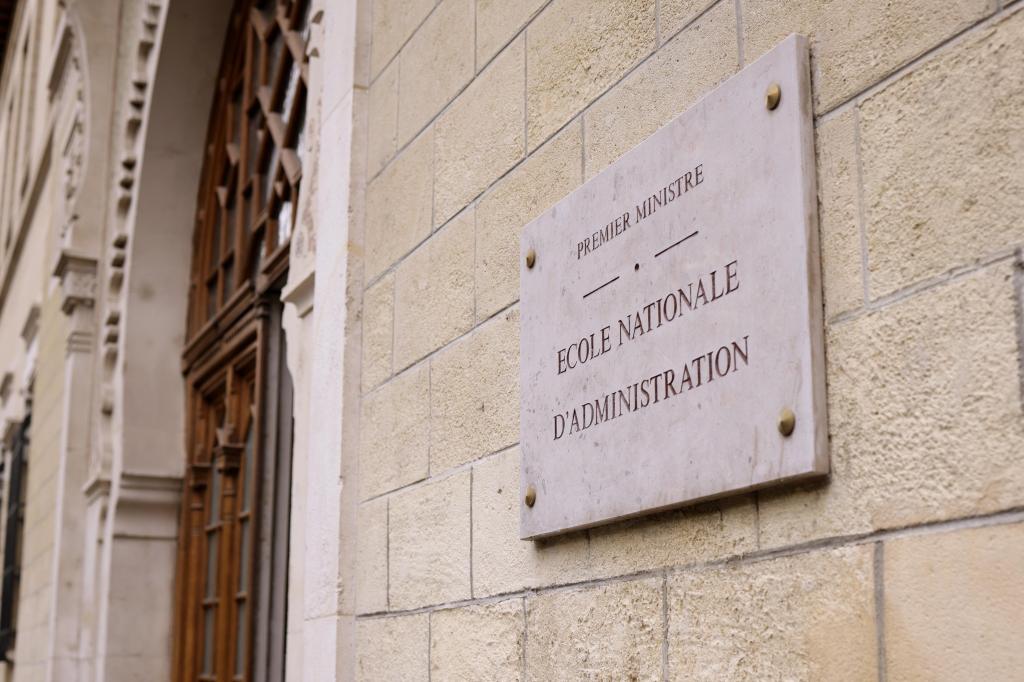
In response, President Macron closed the École Nationale d’Administration (ENA) and replaced it with the Institut National du Service Public (INSP). While this move was seen as a symbolic shift, critics argue that it failed to address the root causes of inequality in France’s political institutions. As Bourdieu noted, superficial changes like renaming institutions do little to dismantle entrenched power structures. True reform must confront the systemic barriers that maintain privilege.
The Need for Genuine and Practical Reform
While elite institutions were created with the intent of ensuring competent leadership, they have reinforced inequality by limiting access to education and power for those from disadvantaged backgrounds. The rigid system of classes préparatoires ensures that only those with the right connections and resources can succeed, perpetuating a cycle of privilege.
To truly democratize access to power, France must embrace genuine reforms that go beyond symbolic gestures. This includes reforming admission processes to the Grandes Écoles and creating alternative pathways into leadership that do not require a Grandes Écoles diploma. Additionally, policies aimed at increasing diversity in elite institutionsshould be prioritized to make the system more inclusive.
As Stiglitz notes, the trickle-down model—whether applied to economics or education—assumes that benefits concentrated at the top will eventually reach the broader population, yet this assumption has consistently failed in practice (Stiglitz, 2012). To break the cycle of privilege, France must implement reforms that create real opportunitiesfor those outside the elite circle.
True reform requires addressing the root causes of inequality, not merely the symptoms. Only by dismantling the structural barriers that uphold these educational and political systems can France hope to achieve genuine social mobility for all.
David Seo is a Research Fellow at The Royal Society of Arts (RSA) and a student of International Relations. He is also passionate about the global wine industry, combining his expertise in political economy and sustainability with viticulture.
Primary References
- Bourdieu, P. (1984). Distinction: A Social Critique of the Judgement of Taste. Harvard University Press.
- Bourdieu, P. (1991). Language and Symbolic Power. Harvard University Press.
- Bourdieu, P. (1996). The State Nobility: Elite Schools in the Field of Power. Polity Press.
- Stiglitz, J.E. (2012). The Price of Inequality: How Today’s Divided Society Endangers Our Future. W.W. Norton & Company.
- Stiglitz, J.E. (2015). Rewriting the Rules of the American Economy: An Agenda for Growth and Shared Prosperity. W.W. Norton & Company.
Additional References on French Politics & Education
Media and Political Influence in France
- Kuhn, R. (2000). The Media in France. Routledge.
French Elite Education System & Meritocracy
- Suleiman, E. N. (1978). Elites in French Society: The Politics of Survival. Princeton University Press.



 International angles
Leave a comment