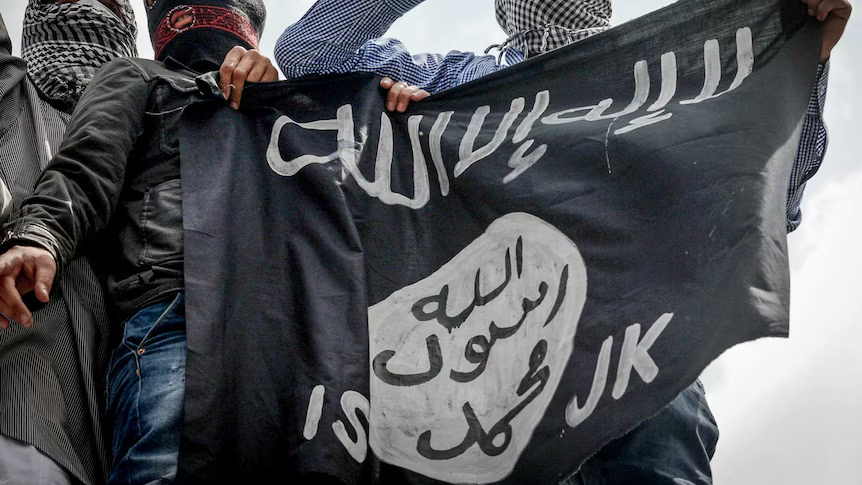
Image from https://www.independent.co.uk
In recent years, the international community’s attention has been focused on major geopolitical crises and high-profile conflicts, such as the war in Ukraine and the Israeli-Palestinian conflict. While these emergencies dominate global discourse, another threat has been rapidly taking shape: ISIS-K.
Recognised as one of the most dangerous branches of the Islamic State, the group has demonstrated a remarkable ability to adapt and exploit the crisis in Afghanistan to its advantage, successfully expanding its influence on a global scale.
To fully grasp the nature of this threat – and accurately assess the danger it poses – it is crucial to examine its origins and objectives. This analysis will explore the group’s foundations, doctrines, operational strategies, and global implications, ultimately addressing a critical question:
Is the world once again making the mistake of underestimating jihadism?
Foundation and doctrines
The Taliban are influenced by the Deobandi movement, a school of thought that emerged in the Indian city of Deoband in the XIX century and follows the Hanafi school of jurisprudence. This school is characterised by a rational and flexible approach that allows for broader interpretation and, consequently, greater adaptability to changing circumstances. It is based on the Quran and the Sunnah, as well as on qiyas (juridical analogy) and istihsan (juridical preference for the common good).
Over time, the Deobandi tradition took root in the Khorasan region and became widely predominant across Asia, as well as in Egypt, Syria, Jordan, and Turkey. Moreover, it extended to certain European regions that today have a Muslim majority, largely due to the Ottoman Empire, which adopted the Hanafi school as its official legal framework beginning in the XIV century under Sultan Murad I (1362–1389).
ISIS, in contrast, is influenced by Salafist ideology, a movement that was reformed in the XIX century but had already been “foreshadowed” in the XIV century. This ideology advocates a return to the original sources of Islam. The Salafist movement is associated with the Hanbali school of jurisprudence, which is known for its rigid, literal interpretation of religious texts. By promoting a return to the salaf (a term referring to the first three centuries of Islam, considered the most pure), Salafism acknowledges only the Quran and the Sunnah as legitimate sources. As such, it rejects qiyas (juridical analogy) and istihsan (juridical preference for the common good), both of which are accepted in Hanafi jurisprudence, in order to eliminate any rational interpretation not explicitly based on sacred texts. More specifically, ISIS belongs to the third strand of modern Salafism: the so called jihadist Salafism.
Unlike the Taliban, who aim to establish an Islamic Emirate in Afghanistan, ISIS seeks the creation of a transnational Islamic Caliphate. The latter aims to destroy modern states (and their respective governments) by using jihad as the primary tool in a total war for the Caliphate. In contrast, the Taliban use jihad solely to govern a specific territory (Afghanistan) and seek diplomatic relations with foreign governments in order to gain recognition from the international community and secure economic aid for the Emirate.
The Taliban were formed in 1994 in the Afghan province of Kandahar with the goal of ending the country’s perpetual instability and imposing Sharia law across Afghanistan. ISIS, however, has a more particular history, having originally emerged as a branch of al-Qaeda in Iraq (AQI). Founded in 1999 by Abu Musab al-Zarqawi under the name Jama’at al-Tawhid wal-Jihad (JYJ), it became part of al-Qaeda’s network in 2004, establishing itself as its Iraqi branch.In 2006, al-Qaeda in Iraq merged with other smaller Sunni Islamist groups to form the so-called Shura Council of Mujahideen, declaring the establishment of the Islamic State in Iraq (ISI). In 2014, strengthened by the outbreak of the Syrian Civil War, it declared itself the Islamic State of Iraq and Syria (ISIS), expressing its intention to expand globally and to eradicate any region not governed by Islam.
How did ISIS-K form?
Image from https://commons.wikimedia.org
To understand the nature of this organisation, we must look back to the Soviet intervention in Afghanistan in the early1990s. During the USSR’s intervention in Afghanistan, several Salafist groups formed in the eastern provinces of the country. On one side – in the province of Nuristan – there was the Revolutionary Islamic State of Afghanistan led by Mawlawi Afzal, while on the other – in the provinces of Kunar and Badakhshan – various groups emerged supported by Saudi Arabia.
These groups were able to establish a strong presence in Afghanistan, making the eastern provinces the heartland of the country’s Salafist movement. After the Taliban’s capture of Kandahar in 1994 and their subsequent rise to power, the Salafists began to support them, collaborating in the campaign to conquer the country.
However, after the Taliban took Kabul on September 27, 1996, and established the Islamic Emirate of Afghanistan, the Taliban implemented various policies against the Salafists. This led to a period of stalemate: due to the U.S. intervention in Afghanistan in 2001, the Taliban and Salafists decided to put aside their ideological differences to fight their common enemy.
But after years of joint struggle against the U.S., the emergence of ISIS jeopardised this collaboration. In 2014, ISIS sent representatives to the Tehrik-i-Taliban Pakistan (TTP), a Pakistani terrorist organisation influenced by the Salafist movement and distinct from the Taliban. This “propaganda” effort yielded results, and in the face of ISIS’s military successes in Syria and Iraq in 2014, many TTP members chose to join the Islamic State.
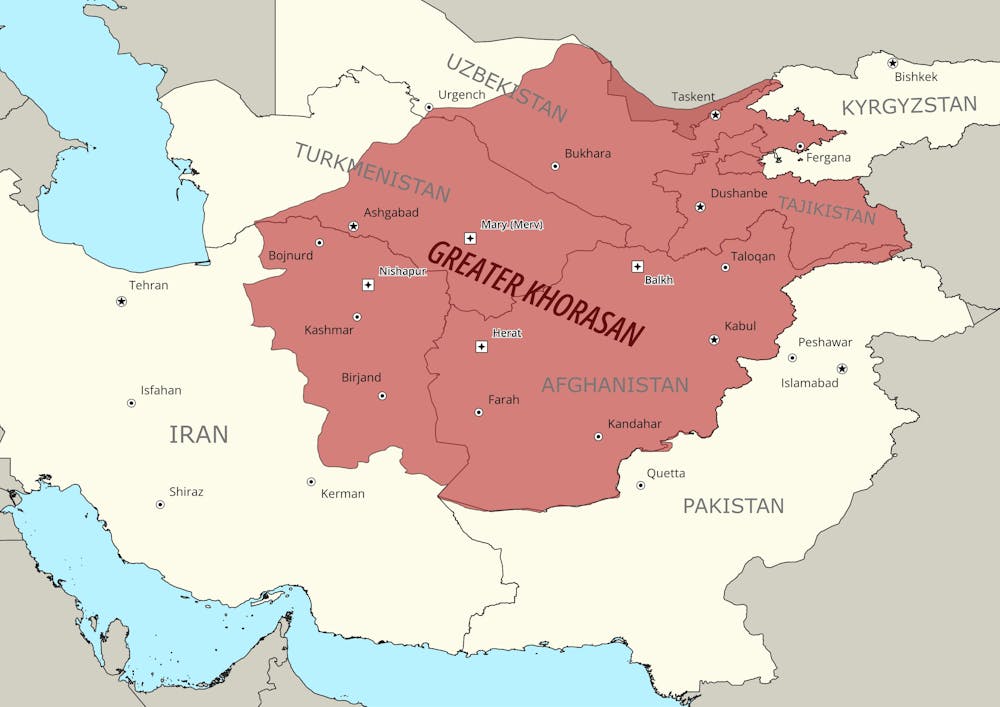
This led to the formation of IS-K, the Islamic State of Iraq and ash-Sham-Khorasan Province, which established itself in the northern and eastern areas of Afghanistan, attacking both the Afghan government and the Taliban. IS-K, also known as Wilayat Khorasan, meaning “the land of the sun,” refers to a historical region encompassing parts of Iran, Afghanistan, and Pakistan.
With the withdrawal of American forces from Afghanistan and the subsequent return to the power of the Taliban, IS-K exploited the situation to its advantage. The Taliban’s relations with Western – and particularly non-Islamic – nations became the focal point of IS-K propaganda, which began labelling Taliban fighters as “friends of the infidels.”
The Taliban, being a group of militias and clans that are part of the same organisation, are not a unified and cohesive group. IS-K took advantage of these internal divisions to recruit the more extreme members within the organisation.
This recruitment became even easier for two main reasons: first, the new government failed to manage the severe humanitarian and economic crisis caused by the cessation of international aid. Second, the new government had not reintegrated individuals from the old regime. These two factors undermined the Taliban’s credibility and generated widespread discontent, allowing IS-K to bolster its ranks with militants. In fact, IS-K includes several members of the Afghan security forces, like the reintegration of former members of Saddam Hussein’s regime in Iraq in 2010.
Subsequently, following the collapse of the caliphate in Syria and Iraq in 2017, IS-K began to gain more prominence and is now considered one of the most dangerous and enterprising groups within the jihadist movement.
Modern global implications
Today, IS-K represents a serious threat to international security, as demonstrated by the attack on Crocus City Hall in Moscow on March 22, 2024. Underestimating a terrorist group of such magnitude is a mistake that the international community cannot afford to make, and for several reasons.

Image by Lawrence Freedman on https://samf.substack.com
First, IS-K has repeatedly shown its ability to launch long-range attacks, as evidenced by the attacks on January 3, 2024, in Iran and on August 22 of the same year in Germany. Having developed transnational networks with countries like Turkmenistan and Uzbekistan, affiliates from these countries can easily operate abroad, traveling more freely with their passports. Additionally, by exploiting migration routes and ties to other foreign jihadist groups, they can rely on a high number of affiliates even outside the Khorasan region.
Second, as mentioned earlier, many members of IS-K are former Taliban or al-Qaeda fighters, and as such, they bring with them additional battlefield experience and expertise.
Third, unlike ISIS, which maintains a total rejection of Western modernity, IS-K takes advantage of mass media and artificial intelligence to further its ideological propaganda. An example of this is the magazine “Voice of Khurasan,” published through the ISKP’s official al-Azaim Foundation for Media Production, which focuses on political and religious topics. In this regard, Rita Katz, co-founder of the Site Intelligence Group, has emphasised:
‘It’s hard to understate what a gift AI is for terrorists and extremist communities, for which media is lifeblood. […] For all of our discussions around AI – its benefits, its shortcomings, the problems it solves or creates – we must address the ways terrorists and other extremist agitators are weaponising it before irreparable harm is done.‘
Today, the international community is making precisely the mistake we previously mentioned it should avoid: underestimating IS-K. The global focus is on the conflicts in Ukraine and Gaza, without considering how this could benefit IS-K. While the world is distracted, the organisation can rebuild and strengthen its transnational networks, as well as plan terrorist attacks. Moreover, Afghanistan will soon become an unprecedented platform for restoring the losses of the last two decades. In fact, IS-K has now spread across almost all 34 Afghan provinces, with an estimated 1,500-2,200 members.
In just a few years, the organization’s motto ‘baqiya wa tatdmaddad’ (remain and expand) will highlight the severe consequences of the ‘undervaluation’ by the international community, and we will be left to relive what we had just, or almost, overcome: terror.
Written by Chiara Caterina, an International Studies at University of Trento, based in Italy.



 International angles
Leave a comment