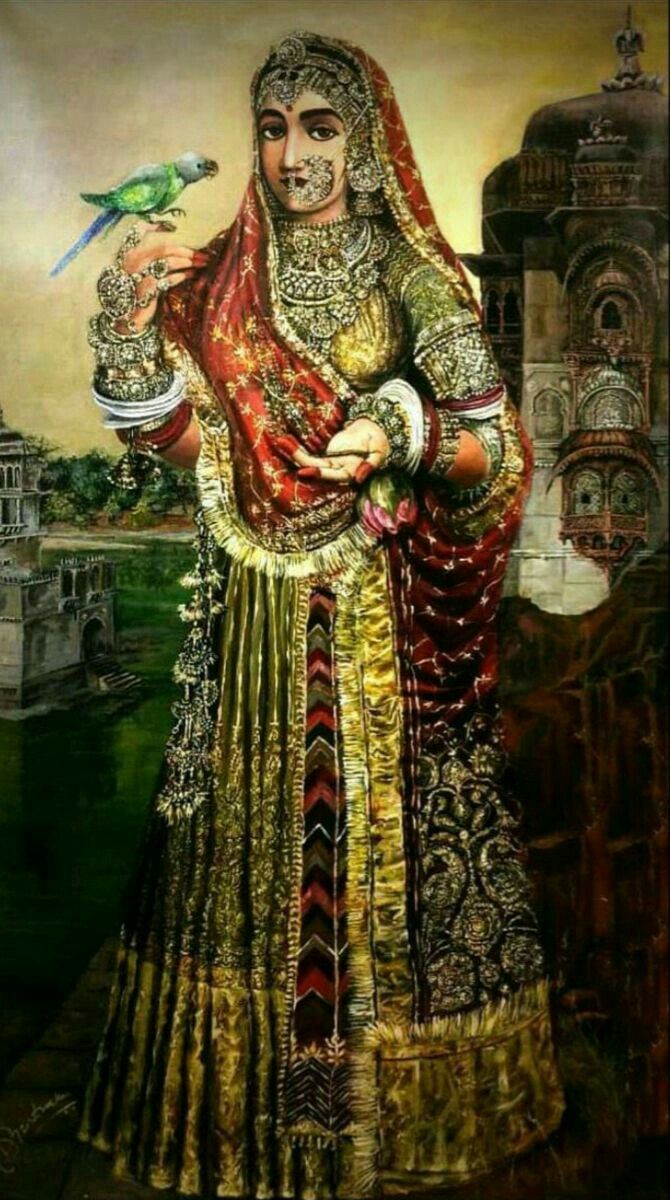
History has a curious way of connecting civilizations, even those separated by oceans and centuries. While each culture evolves uniquely, their values, legends, and spirit often echo across time. India, with its vast mosaic of traditions and kingdoms, offers countless stories that define courage and sacrifice. Among them stands the unforgettable tale of Rani Padmavati of Mewar—a name that continues to inspire awe, reverence, and pride.
The Legacy of Mewar
Mewar, nestled in present-day Rajasthan, is a land steeped in honor, valour, and royal pride. Over centuries, many kings and queens ruled this region, leaving behind forts, traditions, and folklore. But no story from Mewar is as deeply embedded in cultural memory as that of Queen Padmavati of Chittorgarh.
Known not only for her stunning beauty but also for her strategic mind and fearless heart, Padmavati’s story is far more than a romantic legend—it is a symbol of resistance, pride, and unbreakable spirit.
The Obsession of a Sultan
Padmavati was married to Rana Ratan Singh, the noble ruler of Chittor. Her reputation reached the ears of Alauddin Khilji, the ambitious Sultan of Delhi, through a banished courtier named Raghav Chetan. Enchanted by tales of her unmatched beauty, Khilji became obsessed with seeing her.
In 1303 AD, Alauddin Khilji laid siege to Chittorgarh Fort, not for land or politics, but for the queen herself. What followed was a brutal, prolonged siege that pushed the kingdom to its limits.
The Fall of Chittor and the Rise of Legend
Despite the courageous efforts of the Rajput warriors, the fort eventually fell. Rana Ratan Singh was killed in battle, and the fate of the women of Chittor, including Queen Padmavati, hung in the balance.
But Padmavati, embodying the fierce dignity of Rajput tradition, made an unimaginable choice.
Rather than submit to the enemy or face a life of dishonor, she, along with thousands of Rajput women, performed Jauhar a mass self-immolation. Dressed in bridal finery, they stepped into the flames of the Jauhar Kund, turning themselves into ashes rather than trophies of conquest.
When Khilji’s forces breached the fort, all they found was silence and smoke. Victory had eluded them—Padmavati had denied them their prize.
Jauhar: A Rajput Tradition of Honor
The act of Jauhar, deeply rooted in Rajput traditions, was a final stand of honor. While the women chose the flames, the men performed Saka, riding into battle dressed in saffron, ready to embrace death with dignity.
Together, these acts were not of despair, but of profound courage and cultural resistance—valuing honor over life itself.
Fact, Fiction, or Forever a Symbol?
Much of what we know about Padmavati comes from Malik Muhammad Jayasi’s 1540 AD poem Padmavat a literary masterpiece blending Sufi philosophy, romance, and allegory. Notably, this was written over two centuries after the siege of Chittorgarh.
There are no contemporary recordsfrom the 13th-14th century—Persian or Rajput—that mention Padmavati by name, or a siege driven by desire for a queen. Because of this, many historians believe her tale is a legendary allegory rather than a documented fact.
But legends have their own kind of truth. They reflect the soul of a people—their values, fears, and hopes. Padmavati, whether real or romanticized, became the embodiment of Rajputana’s fierce pride and timeless resistance.
Why Her Story Still Matters
In every culture, there are stories that transcend time—not for their historical accuracy, but for what they symbolize. Padmavati’s tale is not just about beauty; it’s about honor, sacrifice, and courage in the face of tyranny. Her name continues to be whispered in the corridors of forts, sung in Rajasthani ballads, and passed on through generations as a reminder of the unshakable strength of a queen
Malik Muhammad Jayasi and the Epic Padmavat
The most detailed version of this story was penned by Sufi poet Malik Muhammad Jayasi in 1540 AD in his poetic masterpiece Padmavat. Though not a historical document, the poem immortalized Padmavati’s spirit through allegory and devotion.
Poetic lines describing her beauty :
Her body glowed like sandalwood, her voice as soft as the koel’s song.
A lotus in royalty, a moon among stars—
Even fairies faded beside her golden glow.
While some believe Padmavati may have been a fictional creation, her legend continues to inspire, reminding us of the Rajput code of honor, sacrifice, and strength.
Rani Padmavati’s Legacy in Today’s World
In an age where women continue to face challenges—some shouted in protests, others endured in silence—her tale resonates louder than ever. She wasn’t just a queen known for her beauty; she was a woman who chose honor over submission, courage over fear, and inner fire over outward allure.
In today’s world, where many still battle stereotypes, inequality, and emotional wounds, Padmavati stands as a symbol of what it means to choose self-worth above all. She teaches us that real power doesn’t lie in how the world sees us, but in the decisions we make when our values are tested.
Whether it’s walking away from disrespect, breaking free from toxic patterns, or daring to take the less-travelled road, every act of quiet rebellion and graceful strength is a reflection of Padmavati’s spirit. She lives on in the woman who speaks up, in the one who rises after every fall, and in the one who knows her worth even when the world doesn’t.
Because true queens don’t just wear crowns. They carry courage in their hearts, and they choose their fire over their fear.
Written by Harshita, who is studying English at the School of Open Learning, University of Delhi.



 International angles
Leave a comment