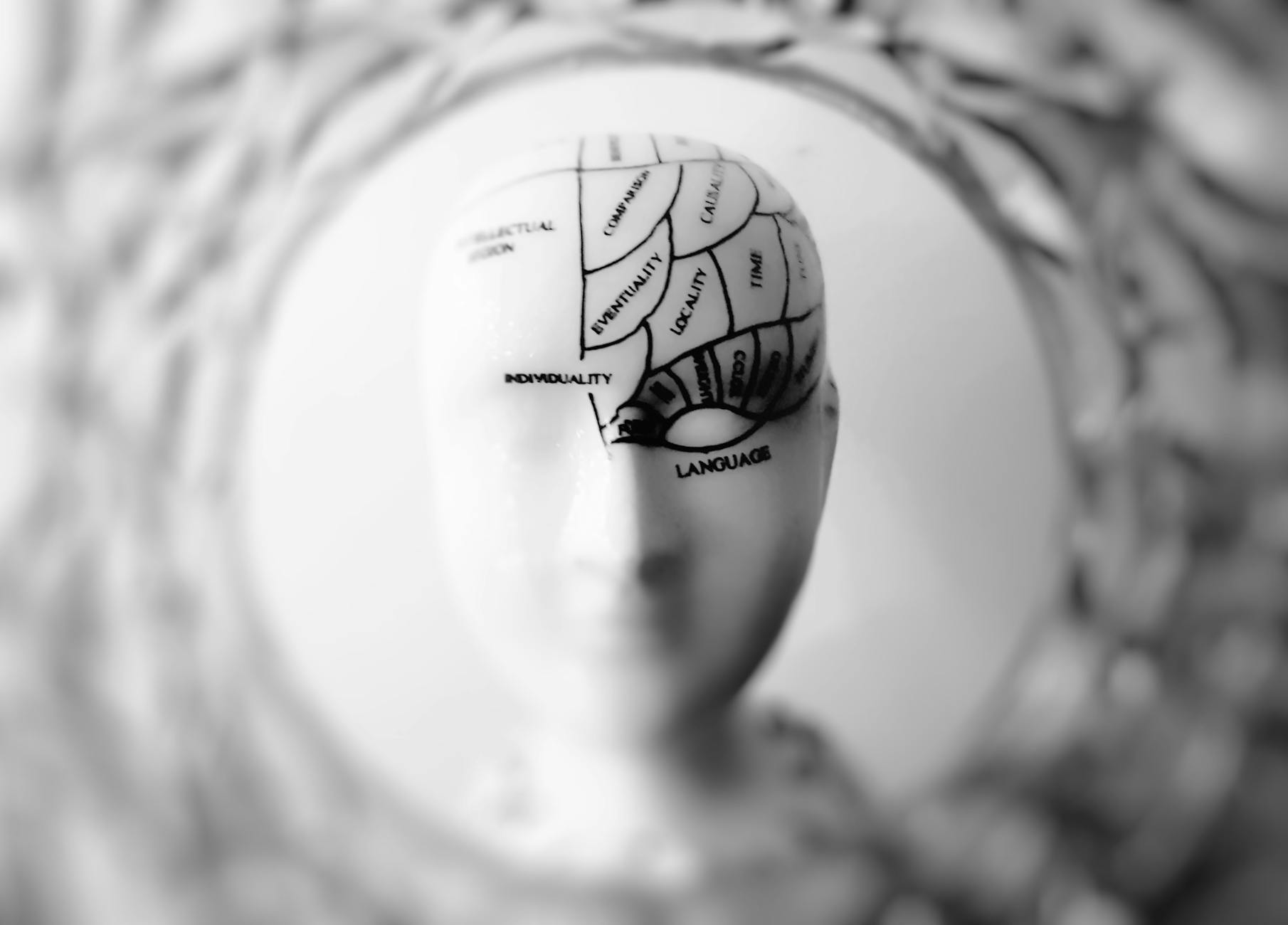
In courtrooms around the world, a quiet revolution is underway. No longer are verdicts determined solely by witness testimonies or circumstantial evidence. Instead, we’re entering an era where brain scans and genetic markers are becoming part of the legal conversation. This emerging field—forensic neuroscience—promises new insights into criminal behaviour and mental illness, but it also raises profound questions about morality, free will, and justice.
As advances in neuroscience increasingly influence legal systems across borders, the implications of forensic neuroscience are far-reaching and globally significant. Internationally, courts are grappling with how to integrate brain-based evidence into legal proceedings while upholding principles of justice, accountability, and human rights. This intersection of law and neuroscience not only raises profound ethical and philosophical questions but also challenges long-standing legal doctrines in ways that demand international dialogue, regulation, and collaboration.
Free Will on Trial
The legal system rests on a crucial assumption: that people have free will. In other words, we are responsible for our actions because we chose them. But what if the brain made the choice before we were even aware of it?
That’s what neuroscience suggests. Benjamin Libet’s (1983) iconic experiment revealed that brain activity predicting a decision occurs several hundred milliseconds before conscious intent. Other research shows that when people read texts denying free will, their brain readiness potential decreases—suggesting our belief in agency is deeply intertwined with brain function (Rigoni et al., 2011).
While these findings don’t negate accountability, they complicate the story. If decisions arise from unconscious processes, then moral and legal responsibility may not be as clear-cut as the law assumes.
Genes, Brains, and the Roots of Criminality
Some people are more prone to aggression or impulsivity than others, and forensic neuroscience is beginning to uncover why. Genetic variants like MAOA, 5HTT, and COMT influence serotonin regulation, which affects emotional control (Caspi et al., 2002). When combined with childhood trauma or neglect, these genetic traits can heighten the risk of criminal behaviour.
Meanwhile, neuroimaging studies of violent offenders and individuals with psychopathy consistently show abnormalities in areas like the prefrontal cortex (involved in decision-making and self-control), the amygdala (emotion processing), and the striatum (reward sensitivity) (Johanson et al., 2020). Together, these findings help explain why some people struggle with empathy, impulse control, or moral reasoning.
Importantly, these traits aren’t destiny. They indicate risk, not inevitability. Neuroscience helps us understand why someone might act a certain way—but it doesn’t excuse the behaviour.
The Courtroom Appeal—and Risk—of Neuroscience
Neuroscience has already made its way into courtrooms as a tool to assess criminal responsibility, insanity, and recidivism risk (Scarpazza et al., 2021). Brain scans can support claims of mental illness or demonstrate impairments in self-control. In some high-profile cases, this kind of evidence has been used to argue for reduced sentences or to oppose the death penalty.
However, these tools come with major limitations:
- Most neuroscientific techniques analyse group patterns, not individuals.
- Scans can be misinterpreted or overvalued by jurors, especially when accompanied by vivid images.
- Conditions like psychopathy evoke less sympathy in jurors and show less mitigating impact in their evaluation, even when brain dysfunction is present.
Moreover, critics warn that introducing neuroscience into the courtroom risks undermining the concept of free will and personal responsibility (Morse, 2006). If we reduce crime to brain chemistry, where do we draw the line between punishment and treatment?
Can Neuroscience Detect Lies and Memories?
One of the most tantalizing applications of forensic neuroscience is the idea of lie detection or memory recognition through brain scans. Technologies like fMRI have been used to observe regions like the dorsolateral prefrontal cortex and anterior cingulate cortex, which are activated when people lie or suppress truthful responses (Langleben et al., 2005).
Similarly, autobiographical memory detection tools attempt to identify whether someone recognizes crime-related stimuli (Rosenfeld, 2005).
The problem? These methods are fragile. They are vulnerable to countermeasures (like subtle physical movements), show inconsistent results across individuals, and can be influenced by stress or distraction (Ganis et al., 2011). For now, these techniques are best seen as supplementary, not standalone, tools in investigations.
When Morality and Law Collide
Legal decisions often require distinguishing between intent and outcome. But what happens when someone breaks the law with good intentions—say, stealing medicine to save a life?
Studies show that jurors tend to give more lenient punishments for morally justifiable actions, even if they technically violate the law. Brain imaging reveals that these moral-legal conflicts engage regions like the right temporoparietal junction (processing others’ intentions) and the right dorsolateral prefrontal cortex (involved in cognitive control) (Yang et al., 2019).
This suggests that moral intuition subtly shapes legal judgment, even among people with no legal training. Understanding this dynamic could help in jury selection and legal education.
Rehabilitation, Not Just Retribution
Forensic neuroscience isn’t just about explaining past behaviour—it also holds promise for crime prevention and rehabilitation. Interventions like early childhood support, omega-3 supplementation, or even brain stimulation techniques show potential in reducing behavioural problems (Raine et al., 2015; Uhlhaas & Singer, 2010). Pharmacotherapy might help manage impulsivity or mood disorders (Krakowsi et al., 2006).
However, these approaches raise ethical concerns, especially when applied in settings like prisons. Treatment linked to parole, for example, can create coercive dynamics that blur the line between care and control.
The Insanity Defence: Neuroscience to the Rescue?
One of the most practical uses of neuroscience is in insanity evaluations. Traditional assessments often rely on subjective interviews and are vulnerable to biases, malingering, and inconsistencies between evaluators (Scarpazza et al., 2021).
A multi-modal neuroscientific approach—combining neuroimaging, cognitive testing, and clinical observation—can improve reliability and objectivity (Scarpazza et al., 2021). It helps distinguish genuine mental illness from faked symptoms and aligns better with the legal standard of “beyond reasonable doubt.”
Still, experts agree: neuroscience should complement, not replace, clinical judgment.
So, What Role Should Neuroscience Play in Justice?
Forensic neuroscience offers powerful tools and fresh perspectives on crime, morality, and punishment. But it also comes with caveats:
- It’s not always ready for prime time in courtrooms.
- It should never be used in isolation.
- Ethical and legal safeguards must keep pace with scientific developments.
Ultimately, forensic neuroscience enriches our understanding of human behaviour and highlights the need for a more holistic, interdisciplinary approach to justice—one that considers biology, psychology, environment, and ethics in equal measure (Greene & Cohen, 2004). As forensic neuroscience continues to evolve, its global impact on legal systems will only grow. Ensuring that its application remains ethically grounded, scientifically sound, and culturally sensitive is not just a national concern—it is an international imperative.
Because behind every crime is a story—not just of neurons firing, but of lived experience, context, and choice. And while the brain may help tell that story, it doesn’t get the final word. The courtroom still belongs to the law, the facts—and the people interpreting them.
Written by Pia Schmitz, 3rd year BSc Psychology student at Forward College.
References
Caspi, A., McClay, J., Moffitt, T. E., Mill, J., Martin, J., Craig, I. W., … & Poulton, R. (2002). Role of genotype in the cycle of violence in maltreated children. Science, 297(5582), 851–854. https://doi.org/10.1126/science.1072290
Ganis, G., Rosenfeld, J. P., Meixner, J., Kievit, R. A., & Schendan, H. E. (2011). Lying in the scanner: Covert countermeasures disrupt deception detection by functional magnetic resonance imaging. NeuroImage, 55(1), 312–319. https://doi.org/10.1016/j.neuroimage.2010.11.025
Greene, J., & Cohen, J. (2004). For the law, neuroscience changes nothing and everything. Philosophical Transactions of the Royal Society of London. Series B: Biological Sciences, 359(1451), 1775–1785. https://doi.org/10.1098/rstb.2004.1546
Krakowski, M., Czobor, P., & Citrome, L. (2006). Weight gain, metabolic parameters, and the impact of race in aggressive inpatients randomized to double-blind clozapine, olanzapine, or haloperidol. Schizophrenia Research, 81(2–3), 329–336. https://doi.org/10.1016/j.schres.2005.08.014
Libet, B., Gleason, C. A., Wright, E. W., & Pearl, D. K. (1983). Time of conscious intention to act in relation to onset of cerebral activity (readiness-potential). Brain, 106(3), 623–642. https://doi.org/10.1093/brain/106.3.623
Langleben, D. D., Loughead, J. W., Bilker, W. B., Ruparel, K., Childress, A. R., & Gur, R. C. (2005). Telling truth from lie in individual subjects with fast event-related fMRI. Human Brain Mapping, 26(4), 262–272. https://doi.org/10.1002/hbm.20191
Morse, S. J. (2006). Brain overclaim syndrome and criminal responsibility: A diagnostic note. Ohio State Journal of Criminal Law, 3, 397–412.
Raine, A., Portnoy, J., Liu, J., Mahoomed, T., & Hibbeln, J. R. (2015). Reduction in behavior problems with omega-3 supplementation in children aged 8–16 years: A randomized, double-blind, placebo-controlled trial. Journal of Child Psychology and Psychiatry, 56(5), 509–520. https://doi.org/10.1111/jcpp.12314
Rigoni, D., Kühn, S., Sartori, G., & Brass, M. (2011). Inducing disbelief in free will alters brain correlates of preconscious motor preparation. Psychological Science, 22(5), 613–618. https://doi.org/10.1177/0956797611405680
Rosenfeld, J. P. (2005). “Brain fingerprinting”: A critical analysis. Scientific Review of Mental Health Practice, 4(1), 20–37.
Scarpazza, C., Pellegrini, S., Pietrini, P., & Sartori, G. (2021). The role of neuroscience in the evaluation of mental insanity: on the controversies in Italy. Neuroethics, 14, 5–21. https://doi.org/10.1007/s12152-020-09444-9
Uhlhaas, P. J., & Singer, W. (2010). Abnormal neural oscillations and synchrony in schizophrenia. Nature Reviews Neuroscience, 11(2), 100–113. https://doi.org/10.1038/nrn2774
Yang, Q., Shao, R., Zhang, Q., Li, C., Li, Y., Li, H., & Lee, T. (2019). When morality opposes the law: an fMRI investigation into punishment judgments for crimes with good intentions. Neuropsychologia, 127, 195–203. https://doi.org/10.1016/j.neuropsychologia.2019.01.020


 International angles
Leave a comment