
In the modern geopolitical landscape, the concept of power is not solely defined by military strength or economic dominance. However, in this modern time and age, countries have used different methods of influencing their power over the world through soft power. Have you ever wondered why tourists go to New York City or Los Angeles? Beyond their economic and political significance, these cities symbolize American culture, from towering skyscrapers to palm trees and the notable “Hollywood” sign. This is just one example of capturing soft power in action, subtly reinforcing the United States’ global influence.
What is Soft Power?
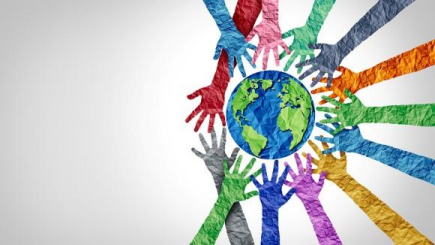
(“Soft power” image via Nature).
The concept of “soft power” coined by political scientist Joseph Nye, refers to “the ability to get what you want through attraction rather than coercion or payments. It arises from the attractiveness of a country’s culture, political ideals, and policies” (Nye Soft Power, Nye p. 154). Unlike hard power, which relies on military might or economic sanctions, soft power works through cultural appeal, political values, and diplomacy to shape global perceptions.
Cultural Influence: The Global Power of Media and Identity
The international mass media influences society through movies, music, art, fashion, cuisine, and literature. These forms of influence can shape a nation’s image abroad. Cultural exports create an emotional connection, influencing how people view a country’s values and way of life.
For instance, Hollywood has been a long-time representation for American cultural influence, from blockbuster films to streaming platforms like Netflix and Disney+.

(“Hollywood sign” photo taken by Frederic J. Brown via Getty Images).
South Korea has also gained significant soft power through the music industry, such as the K Pop genre, entertainment series, and Korean beauty trends to expand global reach and create an avid international fanbase.
France remains synonymous with elegance, luxury, and culinary excellence, which help shape its prestige worldwide. In 2017, France has been dated to be the #1 Strongest Soft Power in the whole nation. French President Emmanuel Macron incorporates policies in cooperation and integration through not only diplomatic networks, but through its cultural richness.
Cultural soft power fosters admiration, but it can also spark potential controversy, which end up shaping perceptions in both positive and negative ways.
Political Values: The Influence of the Government and Ideals
A nation’s governance model, human rights policies, and democratic principles can be quite appealing to others, or those from other respective nations. Countries with strong institutions and civil liberties often inspire others to align with their values. The promotion of democratic institutions and civil liberties can encourage other nations to align politically.
One example is the United States is known for promoting democracy and free speech, positioning itself as a beacon of liberal ideals, despite criticism of its foreign policies.
The European Union has policies that emphasize human rights and digital privacy (for example, the General Data Protection Regulation [GDPR]), as well as environmental protection, all of which influence our global standards.

(“GDPR” logo image via Ackcent).
Scandinavian Nations, including countries like Sweden and Norway to exemplify successful welfare states, inspiring discussions on governance and social equity.
Diplomacy and Aid + Humanitarian Influence
Soft power extends beyond cultural exports! Thriving in diplomacy, humanitarian aid, and global leadership, nations respond effectively to crises or lead international organizations to enhance their credibility and reputation. Ideologies and actions besides military power and negative relations can have impact on global politics. Concrete demonstrations of this include humanitarian aid, peacekeeping missions, and active participation in international organizations can boost a country’s reputation. Soft power is enhanced when a nation is seen as a leader in tackling global issues such as climate change, poverty, and public health.
When countries respond decisively to global crises or disaster relief, they earn moral authority and international respect. Humanitarian actions such as peacekeeping missions or sending aid after natural disasters are tangible expressions of a nation’s values. One critical example of this is India taking initiative by offering COVID-19 vaccines, elevating their soft power during the pandemic, according to the National Institute of Health (NIH).
How Countries Strategically Deploy Soft Power 
(“Soft power” image via The Kathmandu Post).
Countries strategically deploy soft power to increase their global influence regularly. While some rely on cultural exports, others leverage policies, technological advancements, or international partnerships.
United States: The Cultural & Ideological Powerhouse
Even before the rise of the Cold War, the United States has been a dominant force in soft power around the world, leveraging its cultural influence through media, technology, and higher education. In the entertainment industry, Hollywood’s global reach ensures that American culture and values are widely recognized. To reinforce these media influences, the United States has even dominated in streaming platforms such as Netflix and Disney+ to further advance their expansion on soft power. Similarly in education, the United States currently has taken the top rankings for universities from Statista, a statistical database that analyzed the world university rankings as of 2024, such as MIT (Massachusetts Institute of Technology) (98, tied with the University of Oxford in the United Kingdom), Harvard University (97), and Princeton University (97). The high rankings the United States receives attracts international students, which foster global networks of professionals with ties to the United States. When it comes to technology and innovation, everyone is familiar with Apple, the technology company that produces the iPhones and IOS systems, Google (the predominantly used search engine), and Tesla (the electric automobile company that manufactures electric vehicles) reinforcing the country’s leadership in innovation.
China: The Rise of Cultural Diplomacy and Economic Soft Power
China, by contrast, in recent years, has focused on expanding its influence through a combination of cultural diplomacy and economic growth, seeking to reshape global narratives and strengthen its economic ties. One example of this is the Confucius Institutes; these institutions, present in over 150 countries, promote Chinese language and culture, fostering cross-cultural connections, according to the Confucius Institute official website. Another example is the Belt and Road Initiative (BRI): By funding infrastructure projects in developing nations across Asia, Africa, and Europe through economic dependencies, strengthening its global influence. Additionally, China’s digital norms and telecommunication systems expanded significantly through companies like Huawei and TikTok, allowing it to shape digital norms and embed its presence in everyday life worldwide.
European Union: The Power of Policies and Global Leadership
The European Union (EU) employs a distinct form of soft power, using policy leadership, environmental initiatives, and diplomatic engagement to shape global norms. A prime example of regulatory influence is the EU setting standards in areas like digital privacy (GDPR), climate change policies, and consumer protection, forcing global companies to comply with its regulations. According to the GDPR, their mission statement reads “This Regulation protects fundamental rights and freedoms of natural persons and in particular their right to the protection of personal data.” The EU reinforces collective identity centered on democratic values and social responsibility. Diving deep into environmental sustainability, the EU leads climate initiatives, such as the Paris Agreement, an international treaty that aims to limit the degree of global warming we exert to reduce greenhouse gas emissions. This initiative positions the EU as a global advocate for sustainability.
Why Soft Power Matters
Soft power plays a crucial role in shaping alliances, resolving conflicts, and driving economic partnerships. Unlike hard power, which can generate resistance and resentment, soft power fosters voluntary cooperation. Nations that successfully leverage soft power can influence global opinion, attract investment, and secure geopolitical advantages without resorting to force.
In a world where public perception can dictate policy, soft power remains a vital tool for achieving long-term global influence. Countries that master the art of attraction through cultural diplomacy, technological innovation, and ethical governance will shape the geopolitical landscape of the future. The battle for influence is no longer fought with armies alone—it is waged through ideas, values, and global narratives.
But—what can we do as future leaders of the world? The world can only evolve from here on out, the battle for influence is shifting from military to cultural appeal. Nations are stepping up their game in mastering soft power to shape the world, not only to help their own nation, but to build lasting alliances with other nations. There is one question that still remains: How can we reshape the world as we know it through soft power?
Works Cited
Choudhary, Om Prakash, et al. “India’s COVID-19 Vaccination Drive: Key Challenges and Resolutions.” The Lancet. Infectious Diseases, U.S. National Library of Medicine, Nov. 2021,
pmc.ncbi.nlm.nih.gov/articles/PMC8437681/#:~:text=India%20has%20three%20vaccines %20(Covishield,%5D)%20approved%20for%20emergency%20use.
Cybersecurity, Ackcent. “Seven Tips for Compliance with the General Data Protection Regulation (GDPR).” Ackcent, 1 Mar. 2023, ackcent.com/seven-tips-for-compliance-with the-general-data-protection-regulation-gdpr/.
Durrani, Sameera. “What Happens When a Country Bleeds Soft Power? Conceptualising ‘Negative Watch’: Towards an Epistemology for Negative and Adversarial Place
Branding.” Place Branding and Public Diplomacy, Palgrave Macmillan UK, 26 May 2023, pmc.ncbi.nlm.nih.gov/articles/PMC10214324/.
Gray, Alex. “France Becomes the World No 1 for Soft Power.” World Economic Forum, http://www.weforum.org/stories/2017/07/france-new-world-leader-in-soft-power/. Accessed 4 Apr. 2025.
Joseph Nye , and Joseph Nye
Harvard University Distinguished Service Professor. “Soft Power and the Public Diplomacy Revisited.” Harvard Kennedy School, 1 Apr. 2019,
http://www.hks.harvard.edu/publications/soft-power-and-public-diplomacy-revisited.
Jr, Joseph S. Nye. “Soft Power and Public Diplomacy Revisited.” Brill, Brill Nijhoff, 22 Apr. 2019, brill.com/view/journals/hjd/14/1-2/article-p7_2.xml.
Lee, Seow Ting. “Perspectives on Soft Power.” Nature News, Nature Publishing Group, http://www.nature.com/collections/cyvpdvgtmk. Accessed 4 Apr. 2025.
“Nordic Countries among Top 35 Global Soft Power Nations: Press Release.” Brand Finance, 20 Feb. 2025, brandfinance.com/press-releases/nordic-countries-among-top-35-global-soft power
nations#:~:text=%E2%80%9CSweden%2C%20Norway%2C%20Denmark%2C,%26%20 Values%2C%20and%20Governance%20rankings.
Nye, Joseph S. Soft Power,
http://www.mpi.lu/fileadmin/_migrated/content_uploads/GUIDE_jstor_01.pdf. Accessed 4 Apr. 2025. “Soft Power and Morals in U.S. Foreign Policy < Sasakawa USA.” Sasakawa USA, 3 June 2022, spfusa.org/publications/soft-power-and-morals-in-u-s-foreign-policy/.
About the Author
I’m Carly Ochgerel, I am a first-year student attending the University of Virginia in Virginia, United States of America! I am studying Political Philosophy, Policy, & Law (PPL) and Cognitive Science, hoping to pursue a career in medical law. I have plans to minor in Foreign Affairs or change my major, perhaps! I have experience in writing in the past as an editor of the Sterling Volunteer Fire Company’s newsletters and worked as an academic writing mentor for students to write their college essays, research papers, or any other form of writing. I hope to accomplish great things working as an International Affairs Writer at International Angles!


 International angles
Leave a comment