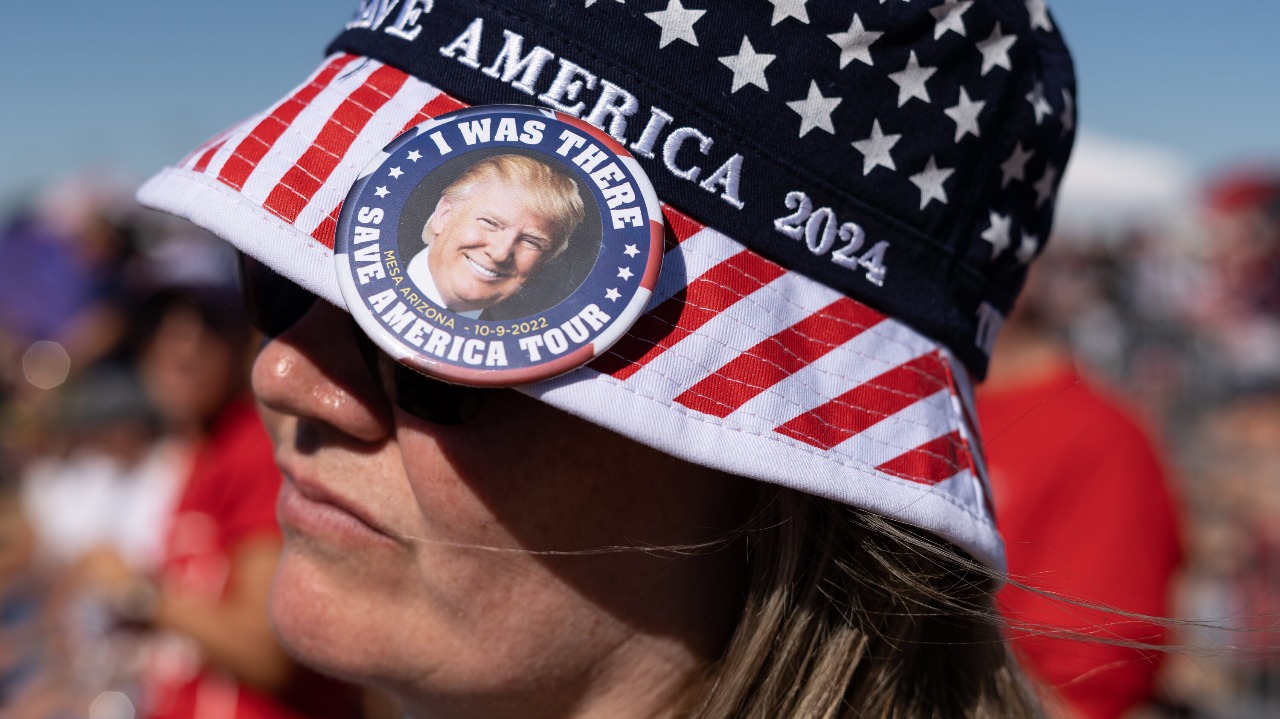
Image available at The New York Times
A New Phase of Trade Confrontation
The global trade environment has undergone a profound transformation in recent months. A series of bold measures initiated by the United States government have significantly reshaped international commercial relations. On April 2, 2025, President Donald Trump revealed sweeping tariffs targeting key global trading partners. The White House symbolically referred to this date as “Liberation Day.”
With the signing of Executive Order 14257, President Trump formally declared a national emergency, citing the chronic and sizeable annual trade deficits in goods as a critical threat. This proclamation framed the trade imbalance not merely as an economic concern, but as an extraordinary and atypical danger to both the national economy and the security of the United States. The Office of the U.S. Trade Representative later issued an official statement addressing the rationale and implications behind this declaration.
Escalating Tariffs and the Spiraling U.S.-China Trade Confrontation
An Intensifying Showdown
A sweeping economic directive, set to take effect on April 5, 2025, introduced a blanket import levy of 10% on virtually all foreign goods entering the United States. Select items are exempt, as delineated in Annex II of the Executive Order issued on April 2. In tandem, a tiered framework of retaliatory tariffs has been enacted, strategically targeting America’s principal trade partners.
Nowhere has the impact been more dramatic than in the standoff with China. What began as a policy maneuver swiftly evolved into a fierce tit-for-tat tariff battle. President Trump took the offensive by layering an additional 34% duty on Chinese imports – compounding the pre-existing 20% tariff applied earlier in two stages. China’s response came swiftly. On April 4, 2025, the Tariff Policy Commission under the State Council of the People’s Republic of China declared that it would mirror the action: a 34% tariff on all American imports, taking effect on April 10, directly countering the provisions of Executive Order 14257.
In response to China’s countermeasures, President Trump ordered an immediate overhaul of the U.S. Tariff Schedule. On April 8, 2025, he signed a new Executive Order that raised the reciprocal tariff rate on Chinese imports from 34% to a staggering 84%, with enforcement beginning the very next day. This adjustment drove the cumulative duty on goods from China to an unprecedented 104%.
That same day, he also enacted dramatic revisions to the de minimis threshold for small-value imports. The ad valorem de minimis duty was tripled to 90%, while a per-parcel handling fee was set at $75 starting May 1, rising to $150 by June 1, specifically targeting packages originating from mainland China and Hong Kong. Simultaneously, the longstanding de minimis exemption for low-value shipments from these zones was rescinded.
On April 9, as the new 104% tariff took legal effect, China retaliated again—raising its duties on American goods to 84%, effective April 10. Merely hours after China’s announcement, Trump fired back. He declared a sudden spike in duties on Chinese imports to 125% on top of the existing 20%, bringing the total tariff burden to a formidable 145%. This aggressive hike was announced while, paradoxically, a 90-day suspension of reciprocal tariffs was extended to most other countries and regions, signaling a selective intensification of the trade conflict centered solely on China.
On April 11, 2025, China delivered its most decisive response yet. The Tariff Policy Commission of the State Council announced a sharp escalation—raising tariffs on American imports from 84% to 125%, to take effect on April 12. This move mirrored the U.S. rate, signaling a final attempt to match Washington’s aggressive stance.
Alongside the announcement came a striking declaration: Chinese authorities stated they would not engage in any further tit-for-tat retaliations, as U.S. exports had become economically unviable under the existing tariff regime. In essence, trade with the United States, under these terms, had ceased to be sustainable.
This latest surge in tariff warfare has been characterized by analysts as a full-blown economic conflict. The ripple effects are anticipated to fracture global trade networks and sow deep uncertainty among exporters on both sides of the Pacific, potentially triggering long-term disruptions across international markets.
Historical Context and Economic Ramifications
The strategic use of tariffs as a tool of foreign policy is deeply rooted in American history. Long before modern trade regimes, the United States was, in many ways, “built on tariffs.” Even during colonial times, customs duties fueled rising tensions with the British Crown, playing a role in the eventual drive for independence. However, President Trump’s recent embrace of tariff-centric economics marks a dramatic departure from the post-World War II tradition—where American diplomacy largely championed open markets and liberalized trade.
This pivot has not been symbolic; it’s been quantifiable. From January to April 2025, the average effective tariff rate in the U.S. surged from a modest 2.5% to an estimated 27%—a level not seen in over a hundred years. These new tariff thresholds surpass even those implemented during the era of the Great Depression, signaling not just a tactical shift, but a structural redefinition of America’s role in the global trading system.
The growing reliance on tariffs, and even the mere threat of their implementation, as a central axis of U.S. trade strategy has ignited serious concern among international actors and domestic stakeholders alike. Numerous nations have begun exploring retaliatory measures, some already set into motion. Within the United States, market participants, especially those in the agricultural sector, are increasingly vocal about the mounting financial toll of the ongoing trade standoff.
The International Monetary Fund has issued stern warnings, asserting that the Trump administration’s tariff initiatives are injecting volatility into an already fragile global economic outlook. Economists globally have raised red flags over the heightened uncertainty and the rising specter of recession.
While certain domestic manufacturers may find short-term relief through protectionist advantages, the broader economic picture is more sobering. Imported goods are becoming more expensive for American businesses, driving up operational costs. Projections indicate that the sweeping tariffs enacted on April 2 alone could push consumer prices up by roughly 1.3% in the near term—translating into an average loss of $2,100 in purchasing power per U.S. household.
More alarmingly, these measures are expected to reduce real GDP growth in the United States by half a percentage point in 2025. Long-term projections suggest a persistent GDP contraction of 0.4%, alongside a staggering 10% reduction in export volumes. When accounting for all tariffs introduced in 2025, along with reciprocal actions by trading partners, real GDP could shrink by up to 0.9 percentage points within the same year, with a lasting decline of 0.6% in economic output. Exports could fall by as much as 18.1% in the longer horizon.
Globally, the impact extends far beyond U.S. borders. Among the economies bearing substantial strain is Canada, which finds itself disproportionately affected by the cumulative effects of these 2025 trade measures and retaliatory responses.
The “Madman Theory” in Foreign Policy
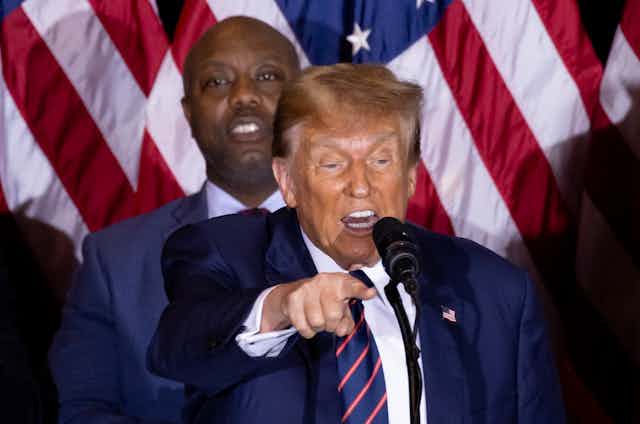
Beyond the economic dimension, President Trump’s negotiation style has frequently been linked to a strategic posture reminiscent of the so-called “Madman Theory.” This concept, originally attributed to Richard Nixon, was reportedly discussed with his chief of staff, Bob Haldeman. At its core, the theory involves projecting an image of irrationality and volatility—portraying the leader as capable of extreme or even self-harming actions—to sow fear and uncertainty in adversaries, thereby increasing leverage in negotiations. The underlying logic is simple but potent: unpredictability, real or feigned, compels the other side to tread more cautiously.
The roots of this strategy stretch even further back. Niccolò Machiavelli, writing in the 16th century, argued that there are moments when it is wise for a ruler to simulate madness. Trump, unlike his predecessors, has openly embraced this notion. He has frequently insisted that the United States must operate with greater unpredictability on the global stage. In various accounts, he urged his aides to depict him as a “crazy guy” during talks—such as with South Korea—intending to extract concessions through calculated intimidation.
Observers have pointed to his erratic behavior toward both allies and rivals as emblematic of this approach. Trump himself has boasted that world leaders are wary of him precisely because, in his words, “they know I’m crazy.” In this framework, threats—particularly the imposition of steep tariffs—serve not just as economic tools but as psychological levers, designed to destabilize counterparts and pressure them into favorable trade terms.
Effectiveness and Critique
The implementation of the “Madman Theory” under Donald Trump’s administration has been characterized by a patchy record—what some commentators have described as “hit and miss.” There are notable instances where Trump’s provocative threats or unconventional proposals failed to produce the intended results. However, certain episodes suggest it may have yielded short-term tactical advantages. A prominent example includes his tariff threats against Mexico, which were never enforced but coincided with a noticeable uptick in border enforcement and a subsequent decline in crossings.
Yet, substantial criticisms surround the viability of this approach as a sustainable long-term doctrine. Strategic credibility—a cornerstone of international diplomacy—demands consistency and predictability. A nation’s ability to inspire trust in its commitments is often eroded by the projection of irrationality. The paradox is stark: a country cannot simultaneously be respected for its reliability and feared for its erratic impulses.
Historically, the roots of this method under Nixon did not achieve the swift resolution hoped for in Vietnam; rather, the war dragged on, culminating in a drawn-out and costly withdrawal. Though Trump appears convinced of its efficacy and has enthusiastically promoted it, many argue that deploying this theory may invite destabilizing consequences. Critics caution that relying on perceived madness as leverage could spiral beyond control, suggesting that the appeal of such a strategy might ultimately rest on a comforting illusion rather than on empirical success.
A Bold Gamble or a Dangerous Game?
The 2025 wave of tariffs unleashed by President Trump has escalated tensions on the global trade stage, reigniting a standoff with China and casting the U.S. into a climate of economic brinkmanship. Behind this hardline approach lies more than just a set of policies—it’s a strategy rooted in disruption and unpredictability, often linked to the infamous “Madman Theory.”
Trump’s brand of diplomacy thrives on volatility, keeping allies and adversaries guessing. In the short term, that kind of pressure can yield results—as seen with sudden shifts in border policy or trade negotiations. But over time, the cost of seeming erratic may be too steep, especially when credibility is the currency of international relations.
At its core, this is not just policy—it’s performance. Trump’s trade war posture doubles as political theater, echoing his campaign’s rallying cry to “Make America Great Again.” The message? America will not play by old rules. It will set its own.
Whether this high-risk, high-drama play will cement U.S. power or undercut it is anyone’s guess. What’s clear is that for Trump, greatness isn’t a goal—it’s a spectacle.
Written by Iris Martini, who holds a BA in Political Sciences from University of Crete, and is studying her MSc in International Negotiations at the Athens University of Economics and Business.



 International angles
Leave a comment