“This city just showed you that it’s full of people ready to believe in good.”

Figure 1-France, 2025
The Call for a Protest
On November 1, after the collapse of the railway station canopy in Novi Sad, demonstrations became a regular part of everyday life in Serbia (BBC, 2025). Unfortunately, the tragic accident that killed fourteen people instantly and left two critically injured—resulting in a total of sixteen deaths—sparked widespread public anger and dissatisfaction (BBC, 2025). Many citizens of Serbia attributed the collapse to a high level of corruption and cost-cutting practices by President Aleksandar Vučić’s Progressive Party (BBC, 2025). As many people protested his regime, Vučić tried to undermine the citizens’ determination to defend their country and oppose corruption.
“Certain foreign powers cannot bear to see a free, independent and sovereign Serbia” (BBC, 2025),
Argued President Vučić, trying to blame international forces for his shortcomings. Interestingly, blaming international “forces” is a standard tool authoritarian regimes use to try and “control” their citizens or create “enemies” that are trying to destroy the country. Even though, on March 15, he made a statement:
“All people in the government have to understand the message when this many people gather. We will have to change ourselves” (Radio Free Europe, 2025).
This will not end the corruption, until the words translate into the actions.

Figure 2- Aleksandar Vučić, (AA, 2025)
Summary of the Protests in Serbia
“A patriot must always be ready to defend his country against his government”
Edward Abbey
Throughout the history of Serbia, it had its fair share of authoritarian and extremely controversial leaders- namely, Slobodan Milošević, for one (Politico, 2025). He was “overthrown” by the people protesting the unfair regime, leading to the October 5 Revolution (Politico, 2025). This example and the history of Serbia reflects the people’s will for justice and their resistance against leaders who try to establish corruption. The accident on November 1 was no different, as it enhanced people’s frustration, as any one of them could have stood beneath that crumbling canopy. Based on the interviews with protesters, during the demonstrations, the crowd was packed shoulder-to-shoulder for over three hours, making it nearly impossible to move through the central two-kilometres stretch of Belgrade (Politico, 2025).
The Power of Youth
As Ella Wheeler Wilcox argued- “to sin by silence, when they should protest, makes cowards of men” (An Ambitious Man, 2013). After the incident, students of Serbia felt compelled to speak out and take to the streets, determined to stand up for the country and defend it. Thousands of people were outside Belgrade alone to fight against injustice (Radio Free Europe, 2025). After a peaceful tribute held by students from the Faculty of Dramatic Arts in Belgrade was met with aggression, the students responded by organizing a blockade of their faculty (ESN, 2025). They issued a series of demands directed at the government, calling for accountability and justice. These demands included complete transparency about the reconstruction of the railway station, the resignation and prosecution of those responsible for the violence, the release of detained activists, and greater investment in public universities. Since then, their demands have gained widespread support, with more than 60 faculties and a growing number of private institutions and high schools across Serbia joining the movement (ESN, 2025). By December 2024, protests have spread across major universities in Serbia, with more than a hundred thousand people protesting at Slavija Square- Belgrade (ESN, 2025).
“Let your voice wake up Serbia”
Was a message from the protester during the rallies (Radio Free Europe, 2025), expressing the strong sense of unity and patriotism shared among the peers.
This was a historic move made by the students of Serbia, from the classrooms to the streets, where the country needed them the most. “A hero can be anyone,” and the power of youth creates “heroes” who can save and rebuild the country. Students play an essential role in influencing the status quo and shaping the future of the country.
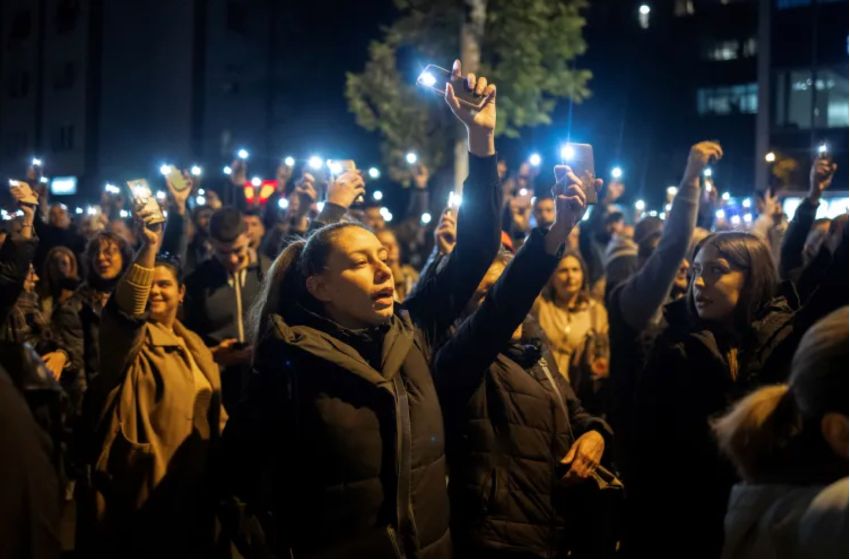
Figure 3-ALJAZERA, 2025
Police Brutality
There have been several sources claiming that batons were used by the police against the students (euro|topics, 2025). Until now, the protest movement—ongoing since November—has largely remained peaceful. Observers now evaluate the political climate considering this recent escalation (euro|topics, 2025). The police’s use of force against students highlights the strength of the people, suggesting that the regime is either growing fearful or increasingly authoritarian—both signs of its vulnerability.
Serbia’s President argued that almost “two dozen people were arrested” who allegedly used “violence” and “vandalism” against the police (Euronews, 2025). Unfortunately, Vučić or his office could not provide valid evidence to support these claims. His central message was:
“Twenty-two people have been arrested because they committed crimes against the properties of other people but also of the Republic of Serbia, for attacking policemen, and attacking other people” (euronews, 2025),
to justify police brutality and government actions. Even though, he did say:
“We understood the message well and all the officials in power must understand the message when so many people gather. We will have to change ourselves and we will have to learn a lot” (euronews, 2025),
These words mean nothing, as he still stays at the working President of the country, involved in high corruption.
Where is the Corruption?
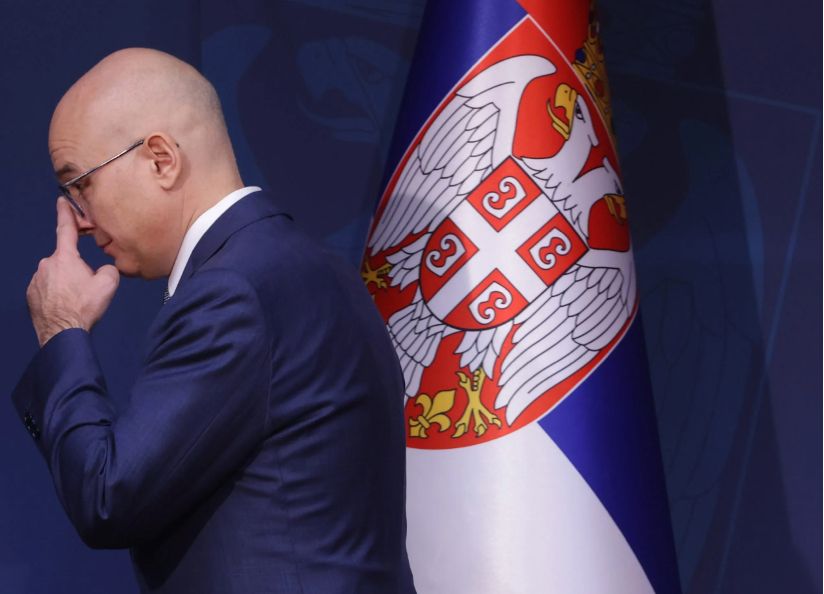
Figure 4- Miloš Vučević, (Politico, 2025)
On January 28, 2025, Former prime Minister – Miloš Vučević resigned. He served as the mayor of Novi Sad as well, from 2012 to 2022, which makes Vučević the longest-serving mayor in the city’s history (Guardian, 2025). His resignation was confirmed by the Serbian National Assembly on March 19, 2025, initiating 30 days for forming a new government or the calling of early parliamentary elections (Politico, 2025).
What does this mean for the Protests and the People of Serbia?
The resignation of the populist Prime Minister is a big win for the people, who have been in the streets for months, fighting for independence and fairness. As the ex- PM argued, after he left the office:
“It is my appeal for everyone to calm down the passions and return to dialogue”,
which was seen as again, a populist rhetoric from his office to “calm people” (The Guardian, 2025).
When it comes to corruption, many people from post-Soviet countries understand what I am talking about. As Hajdari (2025) argues, much of post-communist Europe inherited buildings such as train and bus stations, stadiums, concert halls, and large apartment complexes, all part of the 20th-century push to prioritize public infrastructure for the masses rather than the elite. After the collapse of the Soviet Union, these buildings had to be reconstructed by newly formed governments. The collapsed train station was built in 1964, and since 2021, the Belgrade-Novi Sad-Budapest railway has been undergoing upgrades and retrofitting as part of China’s Belt and Road initiative (politico, 2025). Vučić was very proud of his “investment,” as he claimed that Belt and Road investments have significantly reduced travel times on both the railways and the A1 highway, which connects the north and south of Serbia, taking personal credit for the project (Politico, 2025). However, the accident that has happened says much more than his words. Many suspect that corruption, poorly crafted contracts, or a lack of expert oversight in the station’s modernization may have contributed to the collapse.
Serbia Now
Resignation of the Prime Minister and legal charges against several officials is an excellent accomplishment for people protesting in the streets of Serbia. The demonstration has also strengthened the student-led movement, demanding greater transparency from the government and anti-corruption reforms. However, the Serbian government has appointed Duro Macut as the new Prime Minister, who seems to be an inexperienced ex-doctor who was never involved in politics (AA, 2025). The ex-endocrinologist has been serving as the PM of Serbia since April 16, 2025, which, not surprisingly, is causing frustration among the citizens of Serbia.
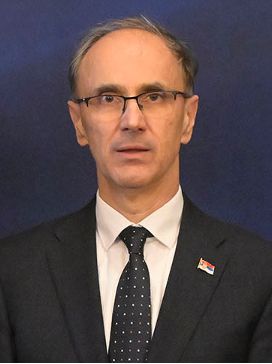
Figure 5- Đuro Macut, (AA, 2025)
As of June 2025, rallies continue in Serbia, showing the spirit and patriotism of its citizens. The people of Serbia are “whatever Gotham needs them to be,” standing on the side of justice and defending the country. The new government appointed in Serbia is not less controversial than the “old” one, with “random” ministers who are not different from the corrupted leaders serving in the office before them. However, while citizens keep protesting and defending the country, there remains hope that meaningful change is within reach.
My name is Elene Suramelashvili, 23 years old from Georgia, Tbilisi. I did my bachelor’s degree at King’s College London in Philosophy, Politics, and Economics. Currently, I am doing master’s degree at UCL in International Public Policy. Because of Georgia’s political complicated history, politics has been an area of interest from me since high school.


 International angles
Leave a comment