
Image available at bloomberg. com
With Donald Trump’s imposition of tariffs on the entire world – including uninhabited islands[1] – the main concept that influenced the creation of the World Trade Organization (WTO) seems to be falling apart. This feeling is further enhanced with the (not so) recent adoption of unilateral regulatory measures by other countries, especially the European Union, additionally restricting trade by creating new barriers and impediments to free trade, through the speech of promoting the Union’s values.
Facing this scenario, the idea of ‘free trade’, in its many forms, seems to be losing its strength and giving space to a new era of de-globalization. But is this the real outcome we will be witnessing in the coming years? Or is this just a quick scared reaction to the latest events in the world of international trade? Will the WTO face the same destiny as the League of the Nations, or can we expect a turnaround? In this post, we will investigate potential answers to these questions.
The creation of the World Trade Organization: the need for freer trade as a strategy to promote peace and development
The World Trade Organization, while Donald Trump constantly repeats the word “tariff”[2], ironically turns 30 this year, and seems to be passing through its “quarter life” crises.
This organization has its origins in the aftermath of World War II: after the devastating results of the war, the consensus was that to avoid another historical and destructive event like that one, measures should be adopted to restrain nationalist and protectionist approaches to global economy and politics, while increasing their integration through freer trade. In this moment, freer trade meant reducing the most common barrier to trade before WWII; that is, tariffs.[3]
The adoption of an increasing plan of tariffs in the United States in the 1920s and 1930s through the approval of the Fordney-McCumber (1922) and Smoot-Hawley (1930) Acts aimed to protect American farmers and businesses. However, the ultimate result of this movement was the initiation of a trade war that, from one side, slowed down the rhythm of the United States’ economy and, on the other, provoked a collapse in foreign economies. The consequences of this trade war for Germany were particularly sensible, giving that the country was not able to pay its reparations after the end of World War I.
The decline in international trade and its negative impact on the German economy potentially opened space for more nationalist views on politics and economy, with the final result being the beginning of the Third Reich and the outburst of the Second World War.
Recognizing that a tragedy of this scale could not be repeated, countries agreed that the best way to avoid the reproduction of harmful protectionist and extreme nationalist practices would be to find a commonly agreed solution that promoted the global economy and development based on consensus and predictability.
With this idea under consideration, the General Agreement on Tariffs and Trade (GATT) was adopted in 1948 to promote a constant and progressive liberalization in international trade based on the following principles: non-discrimination, transparency, reciprocity, flexibility, and consensus in decision-making.[4]
Following the adoption of the GATT, its Contracting Parties would constantly gather together to agree on a progressive reduction of tariffs during the so-called ‘trade rounds’. With the adoption of such rounds, for almost fifty years, the high rates of tariffs internationally applied have considerably decreased, especially in developed countries.
With the awareness that tariffs were decreasing, some members adopted other protective measures to restrict trade – non-tariff barriers, including strict regulatory standards.[5] This changing scenario, combined with a new world order that seemed to be in its creation with the fall of the Soviet Union and the emergence of new rising actors, such as a restructured Japan and the European Communities, the former Contracting Parties of the GATT 1948 established the creation of the World Trade Organization in 1995, to further the aim of promoting free trade, achieve social and economic development, while being guided by the idea of sustainable development, recently incorporated in the Rio Declaration (1992).[6]
The international rules on trade, at that moment, were not limited anymore to reducing tariffs or tariff-related protectionist measures, as provided for in the Marrakesh Agreement, responsible for creating the WTO. To become a member of the newly created organization, in addition to the GATT 1994 countries also needed to adopt the General Agreement on Trade in Services (GATS), the Technical Barriers on Trade Agreement (TBT Agreement), the Agreement on Subsidies and Countermeasures (SCM), the Agreement on Trade-Related Investment Measures, and the Agreement on Trade-Related Aspects of Intellectual Property Rights (TRIPS).[7] Trade, therefore, was not to be seen as an isolated subject, but in conjunction with many other economic and non-economic aspects: science, environmental protection, investment, competition, intellectual property.
Beyond these agreements, the Dispute Settlement Body was introduced by the Marrakesh Agreement in its new form, with the possibility of Complainants or Respondents appealing the decision issued by a Panel to the Appellate Body, relying on a “court” of experts, instead of mere diplomatic negotiations.[8] Moreover, decisions on whether to adopt or reject a Report issued by the DSB would not be based anymore on the standard rule of consensus, but on the ‘reverse consensus’ rule: the Report would only not be adopted if all parties agreed to reject it.
A collapse of the WTO?
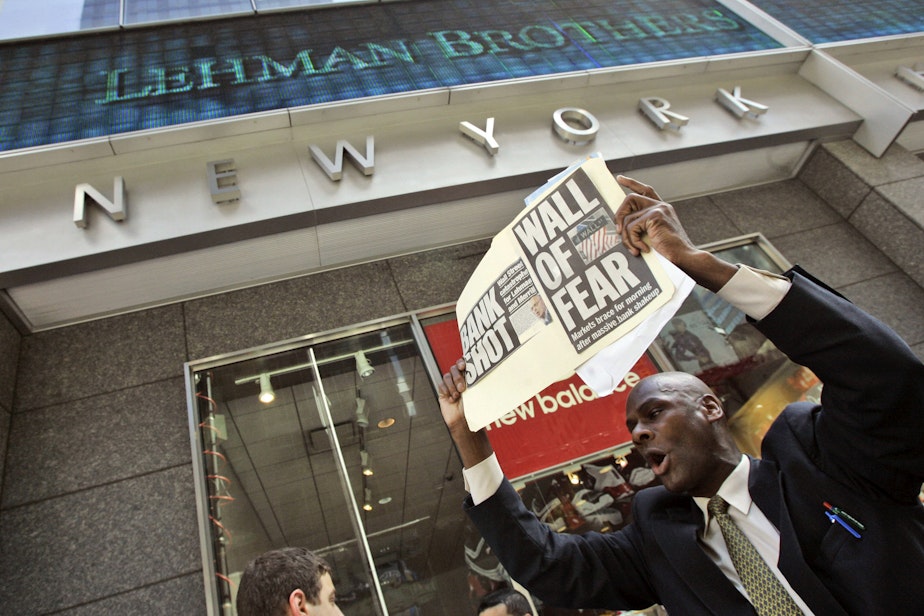
Photo available at Getty Images.
After the 2008 financial crisis, with worldwide spill-over effects, questions on the real advantages – or issues – stemming from globalization proliferated. As a result, many institutions that were in part the outcome, but also the origin of this globalization process started to be heavily targeted by political statements, mainly leaning to a more nationalist view of economy and politics.[9]
When it comes to the WTO, the doubts cast on the benefits of globalization were summed up with additional critiques directed to the Appellate Body’s alleged ‘activism’ when interpreting the WTO Agreements.[10]
This main critique ultimately led to the paralysis of the Appellate Body in 2019, when the United States blocked the appointment of new judges to the Body.[11] Consequently, if WTO Members do not agree with a report issued by a Panel in a WTO-related dispute, their appeal will be directed to the ‘void’, with no real adjudicator to analyse the appeal and issue a final decision.
In addition to the paralysis of the AB, the first trade war initiated in Donald Trump’s first term further indicated the weakening process of the WTO – negotiations were mainly held outside the institution’s environment, with countries dealing with trade concerns bilaterally.
The multiplication of bilateral or regional agreements, summed up with the process of “reshoring”, “near-shoring”, and “friend-shoring”, strengthened by the supply disruption caused by the Covid-19 pandemic, further increased the feeling that a multilateral trade world was not in scene anymore, followed by the increase in nationalist and protectionist regimes in countries such as the United States, the United Kingdom, and France, for instance.
With the second trade war deflagrated in the ongoing Trump’s second term, with tariffs being imposed including on the US’ closest trade allies, and the GATT rules being clearly disregarded by the Trump’s administration, the question persists and is reinforced: is this the end of the WTO?
Relying on a predictable system is still the best option
In spite of the tariffs unilaterally imposed by the United States, later attracting retaliatory reactions from the targeted countries without a previous decision being issued by a WTO’s Panel, the WTO’s dispute settlement system is not entirely abandoned. In fact, heavily targeted countries such as China and Canada both triggered the DSB by requesting consultations regarding Trump’s tariffs.[12] Even though paralyzed, the WTO’s Dispute Settlement Body still carries its importance as being a reliable and predictable forum for dispute resolution by those countries that face the United States’ unilateral approach to international trade.
Moreover, with the multiplication of unilaterally adopted regulations with trade impacts, many countries have responded by strengthening or modifying their own rules on trade retaliation, where many of those were originally based on the principle that a retaliatory measure will only be adopted after confirmed by a Dispute Settlement Body final decision. These new rules, although sometimes removing the requirement of a final decision being issued by the DSB to allow the adoption of retaliatory measures, have justified their approach in the idea that, in spite the paralysis of the Appellate Body, measures that rely on a predictable legal system are always preferred – therefore, when a WTO rule is violated, inaction should not be the answer for securing countries’ rights under an international agreement. This rationale may be found, for instance, in the European Union Enforcement Regulation (Regulation (EU) 2021/167).
The WTO beyond tariffs
Additionally, the WTO must not be solely seen as a forum for disputes regarding tariffs. Its structures go much beyond deciding on this issue, providing a space for discussion in emerging and old issues still unresolved.
As an example, the WTO’s thematic committees are responsible for providing a forum for discussing themes such as plastic pollution and trade, trade and gender inequalities, the increase in digital technologies in trade, and the integration of small companies to international trade.[13]
Furthermore, through research and data analysis, the WTO operates as an important source of information concerning current trade practices and regulations adopted by its Member States. By sharing this information, it promotes a transparent access to such policies, boosting legal predictability in international trade.
What’s next?
Despite this broad web of roles played by the WTO, one answer is accurate: the WTO is facing one of its most tense moments since its establishment in 1995. To face this scenario, however, the complete abandonment of the Organization does not seem the right path.
The 30 years old WTO lives in a world different from that one in 1995: new economies have emerged, the digital economy and climate change pose new challenges to regulation, and the consuming market has not only expanded, but changed its preferences. As a result of these changes, another conclusion is shared: the Organization needs a reform in order to adapt to the current international trade environment. Differently from 1995, this reform shall consider the new global players’ needs, but also the potential challenges they pose to common global interests, such as environmental protection, safety, and legal predictability.
Despite this conclusion, however, when this reform is taking place is still undetermined, considering the lack of political agreement on this matter. Nevertheless, while the WTO is still operating, its vast roles, incorporated in its structure, must be explored by Member States that support a predictable international rule system when facing unilaterally adopted measures. By relying on this support, the WTO is still able to resist and wait for a better moment for transformation. Its future does not need to be solved when it’s thirty years old.
Written by Melina, who is pursuing an LLM in International Trade and Investment Law at the Universiteit van Amsterdam.
[1] See https://www.theguardian.com/us-news/2025/apr/03/donald-trump-tariffs-antarctica-uninhabited-heard-mcdonald-islands.
[2] Luciana Ghiotto, ‘Trump’s Favorite Word: Tariffs’, (tni, 17 April 2025) <https://www.tni.org/en/article/trumps-favorite-word-tariffs> accessed 14 May 2025.
[3] Richard Baldwin, ‘The World Trade Organization and the Future of Multilateralism’ (2016) 30(1) Journal of Economic Perspectives 95-116.
[4] Ibid.
[5] Veijo Heiskanen, ‘The Regulatory Philosophy of International Trade Law’ (2004) (38 (1) Journal of World Trade, 1-36.
[6] Peter Van den Bossche and Werner Zdouc, ‘The Law and Policy of the world Trade Organization: Text, Cases, and Materials’ 3rd Ed (CUP 2013).
[7] WTO Agreement: Marrakesh Agreement Establishing the World Trade Organization, Apr. 15, 1994, 1867 U.N.T.S. 154, 33 I.L.M. 1144 (1994) [hereinafter Marrakesh Agreement or WTO Agreement].
[8] Ibid., Annex 2.
[9] Nicolas Lamp, ‘How should we think about the winners and losers from globalization? Three narratives and their implications for the redesign of international economic agreements’ (2020) 30(4) The European Journal of International Law, 1359-1397.
[10] Uduakabasi Bassey, ‘A Critical Analysis on the Extent to Which the Appellate Body of the WTO has Engaged in Judicial Activism’, (October 4, 2022), <https://papers.ssrn.com/sol3/papers.cfm?abstract_id=4237429> accessed on 14 May 2025.
[11] Hugo Perezcano Díaz, ‘The WTO Appellate Body’s Impending Paralysis’ (CIGI, 10 December 2019), <https://www.cigionline.org/articles/wto-appellate-bodys-impending-paralysis/> accessed 14 May 2025.
[12] United States – Additional duties on imports of automobiles and automobile parts from Canada – Request for consultations by Canada – Request for Consultations by Canada (07 April 2025) G/L/1566, WT/DS637/1; and United States — Additional Tariff Measures on Goods from China – Request for Consultations by China (4 February 2025), G/L/1561 ; WT/DS633/1.
[13] World Trade Organization (WTO), ‘WTO Trade Topics’, <https://www.wto.org/english/tratop_e/tratop_e.htm> accessed 14 May 2025.


 International angles
Leave a comment