
Figure 1- Civil Georgia, 2025
First they came for the Communists
And I did not speak out
Because I was not a Communist
Then they came for the Socialists
And I did not speak out
Because I was not a Socialist
Then they came for the trade unionists
And I did not speak out
Because I was not a trade unionist
Then they came for the Jews
And I did not speak out
Because I was not a Jew
Then they came for me
And there was no one left
To speak out for me
(Pastor Martini Niemöller, 1968)
A 21-year-old Mate Devidze was prosecuted by the Georgian judicial system and sentenced to 4 years and 5 months in prison for allegedly attacking a police officer during a protest. Arrests increased significantly throughout the months, as the people of Georgia were rallying in the streets, protesting the Georgian Dream party’s (GD) actions.
I think, therefore I protest
The protests were sparked in November of 2024, when so-called Prime Minister- Irakli Kobakhidze, of the illegitimate government of Georgia- the Georgian Dream (GD), stated that they would suspend negotiations and talks with the European Union until the year 2028 (Aljazeera, 2025). This meant that even though on 14 December 2023 Georgia got a candidate status in the European Union (Radio Freedom, 2023), the country would stop affiliating its politics with the direction of the EU. Unsurprisingly, this unconstitutional move from the GD triggered protests in the streets of Georgia. As Article 78- Integration into European and Euro-Atlantic Structures of the Georgian constitution states:
“Constitutional bodies shall take all measures within the scope of their competences to ensure the full integration of Georgia into the European Union and the North Atlantic Treaty Organization” (Georgia’s Constitution, 2020).
This meant that the GD was completely changing the country’s foreign policy trajectory, turning away from the European Union and adopting pro-Russian policies. As Russia started a full-scale invasion of Georgia in 2008 and is still occupying more than 20% of Georgia’s territory (EURACTIV, 2021), people were dissatisfied with the unconstitutional move.

Figure 2- November Protests in Georgia, The Guardian, 2024
As citizens’ anger grew, the people of Tbilisi started rallies in the streets to show their discontent with the policy change to the Georgian Dream party. In order to discredit the movement, the GD came up with propaganda that these protests were “funded” by the West and the opposition parties. When the propaganda did not quell the protests, police started to use force to intimidate and beat people demonstrating in the streets (Human Rights Watch, 2024). When even police brutality failed to end the protests, the “government” started, first, fining people for marching and second, arresting them (Amnesty International, 2024). The fine amount is 5000 Lari, which equals 1364.43 Pounds, and the most widely cited reason for the fines was “illegally blocking the road”.
To justify its actions, the Georgian Dream party invented a new and supernatural enemy—the Global War Party, which they claim is responsible for funding the protests to ‘encourage’ the regime change. This narrative was and is currently being used to discredit the Georgian people who had taken to the streets in various cities to oppose the party’s actions and its anti-European policies.

Figure 3- Protests in Georgia, Amnesty International, 2024
GD’s “Beef” with “Additional Voices” and Global War Party
Before President Donald Trump popularised the conspiracy about “deep state,” the Georgian Dream party was fighting with something called the “Global War Party,” which, as the oligarch of Georgia- Bidzina Ivanishvili, defines:
Is a global force that first forced the confrontation of Georgia with Russia and then put Ukraine in even worse peril (Politico, 2024).
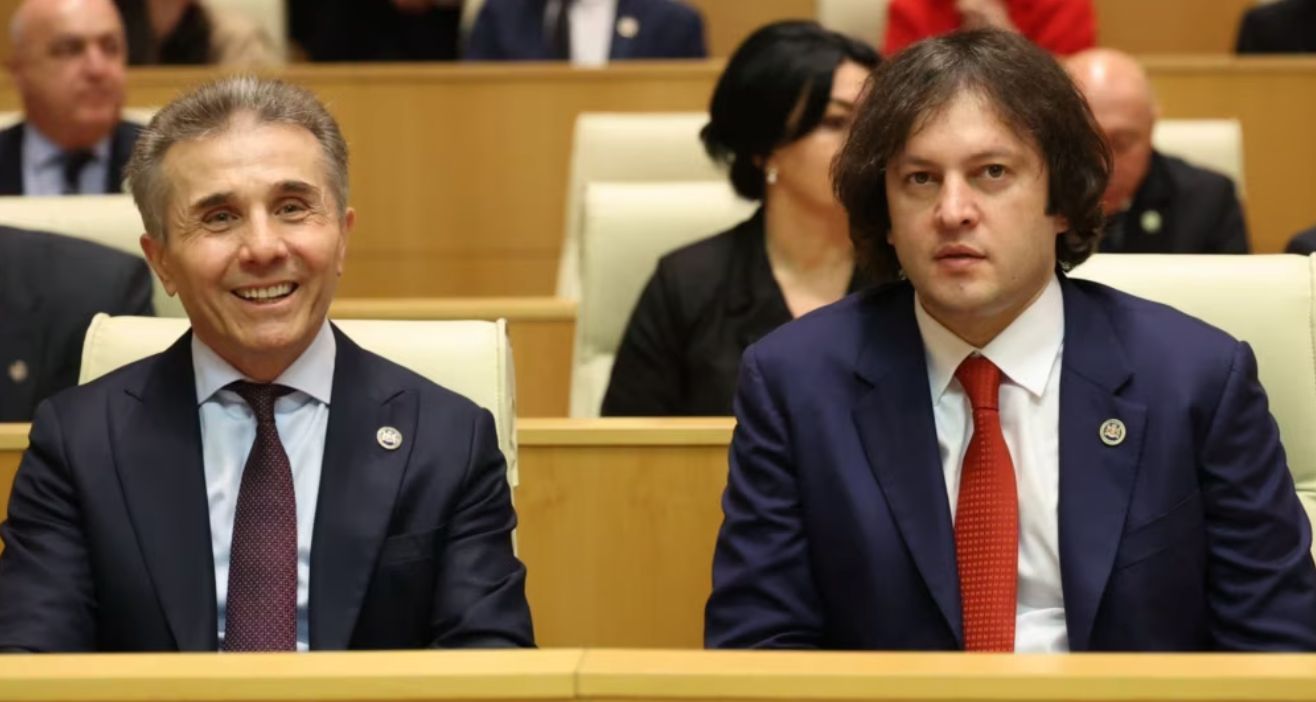
Figure 4-Bidzina Ivanishvili (right) and Irakli Kobakhidze (left), Radio Freedom, 2024
Georgia’s parliament members believe that these forces want to open a second front of the war against Russia in the country, which has a land area of 69,700 square kilometres and a population of approximately 3.7 million. Blaming made-up ‘forces’ for a country’s shortcomings is a common practice by authoritarians who aim to scare their citizens. To define the ‘enemy,’ many MPs have conducted interviews and propaganda cues on national television to ‘educate’ people who are protesting the regime.
In an interview with The News Agent Podcast, a member of parliament, Mariam Lashkhi, started talking about “additional voices” for the first time, to “analyse” international politics:
Today, when me, myself, I am involved in foreign relations and sometimes when I have the partnership and then they say that, well, you are OK, and you are doing well but then there is an additional voice (Politico, 2024).
She claimed that “additional voices,” like those of “Free Masons,” are involved in global policymaking and are responsible for most of the current conflicts (Politico, 2024). This propaganda has become even more prominent in Georgia, making GD the only party on Earth that fights “deep state” and the “Global War Party” for true sovereignty.
After going against the constitution by switching pro-European path and by arresting peaceful protesters, which was partially written and amended by the Georgian Dream, the GD blamed the chaos in the country on the “forces” working only against Georgia. Protests continue, while the number of arrests rises daily on questionable or unfounded grounds. In this blog, I shall discuss the story of prisoners of conscience to examine the influence of GD on the judicial system and injustice in Georgia.
Prisoners of Conscience
“The darkest places in hell are reserved for those who maintain their neutrality in times of moral crisis”.
(Dante Alighieri, 14th century)
The term Prisoner of Conscience was first used by Amnesty International during the early 1960s “to apply to anyone held in detention because of their peaceful expression of any opinion including on politics and religious belief” (House of Commons Library, 2025). Even though, according to the Declaration of Human Rights, every single person in a country must have equal rights, “no one is to be subjected to arbitrary arrest, detention or exile (Article 9)” and “everyone has the right to freedom of thought, conscience, and religion (Article 18)” (Human Rights Commission, 2012), the violation of people’s rights because of their political beliefs happens in a lot of countries.
Seymour (1979) argued, a Prisoner of Conscience is “a non-violent, non-larcenous person imprisoned because of his or her beliefs” (Seymour, 1979, p. 102). Cambridge Dictionary defines the word as “someone kept in prison because their political, religious, or other beliefs are different from those of the government.” This means that the prisoners of conscience are victims of political prosecution.
In Georgia, the movement of სინდისის პატიმრები, which translates to Prisoners of Conscience, was created by the family members of the people who were arrested during the protests (Radio Freedom, 2025). On April 2, Qetuna Qerashvili, the sister of political prisoner Dr. Irakli Qerashvili, who was imprisoned on December 6, 2024, made a statement at the demonstration:
We, the parents and family members of prisoners of conscience, are creating a public movement called ‘For the Freedom of Prisoners of Conscience (Radio Freedom, 2025).

Figure 5-Families of Political Prisoners, Radio Freedom, 2025
This started a wider movement of Prisoners of Conscience in Georgia, gaining domestic and international attention. Irakli Qerashvili, together with 10 other protesters, was accused of “group violence,” which is punishable by 4 to 6 years in prison (Radio Freedom, 2025). The charges are the same in each case. Only the surnames differ according to each case. Prosecutor Vakhtang Tsalughelashvili read the charges at the pre-trial hearing on March 12, stating:
The investigation has confirmed that the accused threw various objects at law enforcement officers, used pyrotechnic devices, and some of them participated in the so-called barricade construction, thereby resisting police officers. Each of the accused actively took part in violent actions (Radio Freedom, 2025).
On December 5, 2024, an actor of the New Theatre, Andro Chichinadze, was arrested at his home on the same charges as Irakli Qerashvili. Prior to the arrest, his home was searched, and electronic devices, including Chichinadze’s phone, were sealed (Radio Freedom, 2025). Andro’s participation in the demonstrations had been ongoing for months in Tbilisi. During one of the demonstrations, he said in the interview with On.ge:
I stand with my friends for the European future, and I believe that it’s essential that every sector goes on strike today, so that Georgia’s European future will not be threatened… We must do everything we can to obstruct a government that is illegitimate and to tell them, once and for all, that we will not accept their policies (On.ge, 2025).
After his arrest, the New Theatre was closed in protest against GD’s wrongful prosecution of the 28-year-old actor.

Figure 6- Poster on the New Theatre, Radio Freedom, 2025
Andro Chichinadze, together with- Jano Archia, Ruslan Sivakov, Luka Jabua, Guram Mirtskhulava, and Onise Tskhadadze were charged under Article 225, Part 2 of the Georgian Criminal Code for committing the crime of “participation in group violence” (Transparency International, 2024). Interestingly, and unsurprisingly, there is no evidence of these protesters committing any “group violence,” as they did not even know each other before being put in detention. These people are being prosecuted because of their political beliefs and for being active on the streets, protesting the Georgian Dream’s policies.
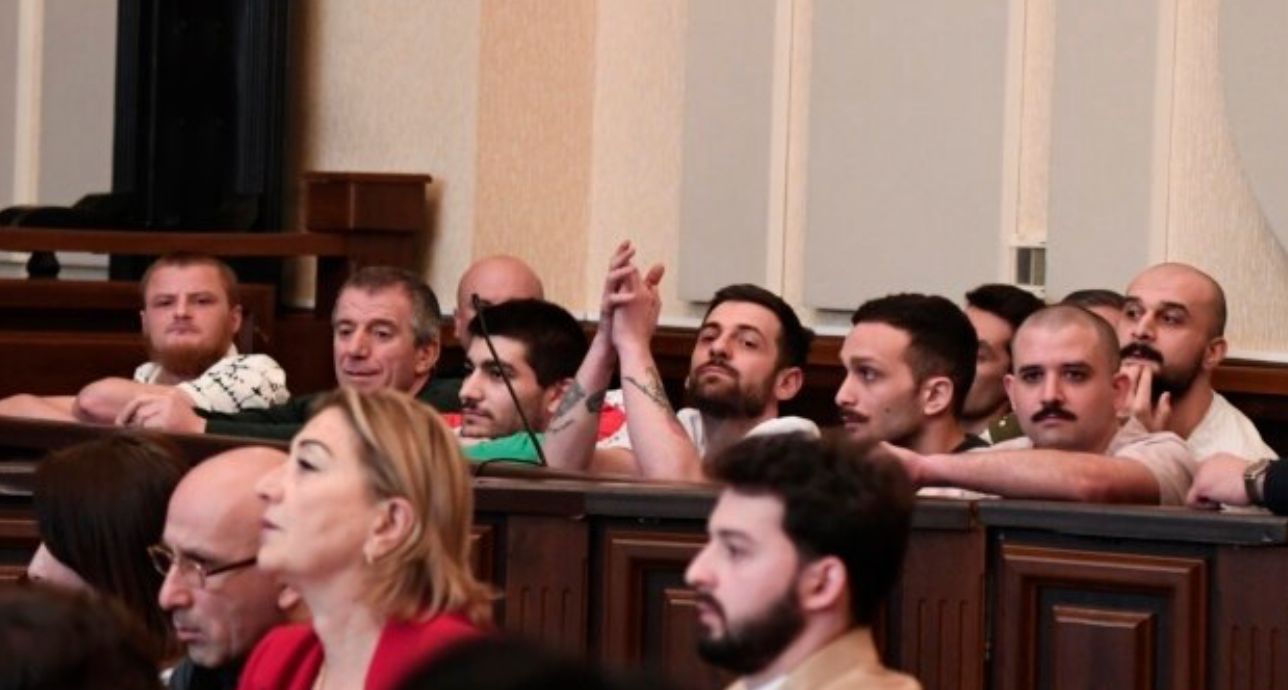
Figure 7- Picture form the Court, Radio Freedom, 2025
On June 12, 21-year-old Mate Devidze was imprisoned for 4 years and 5 months for, “suddenly attacking law enforcement officers on Melikishvili Avenue on November 19 with a stick-like object” (Radio Freedom, 2025). Three different police officers were allegedly attacked by, at the time, a 20-year-old boy, who, according to the prosecutor’s office, struck the officers with a flagpole. During one of the court sessions, Mate stated:
I miss my guitar. Imprisonment is the most extreme option — in my case, it’s the harshest possible punishment. I don’t deserve this.
What state-controlled media and the GD party did not show their supporters was the police brutally attacking Mate and other protesters in the street. They were running from the police when they abducted some of them. A young boy will spend years in prison because he was stating his opinion and participating in the demonstration.
These are just some of the stories of prisoners of conscience who are being arrested and prosecuted by a judicial system that the Georgian Dream Party controls.
“All human beings are born free and equal in dignity and rights”
(Human Rights Commission, 2012).
Being a Prisoner of Conscience often means that the government has arrested that person for sending a message to its citizens- protesting or speaking out will have consequences. The name itself, Prisoners of Conscience, highlights the system’s injustice, which punishes citizens for critically analysing or protesting government behaviour. This is a story of the rallies in Georgia, where patriots’ liberty is restrained from scaring other citizens, but “people want to do something, right here, right now, to shame them, to make them accountable, to show the Capitol that whatever they do or force us to do there is a part of every tribute they can’t own.”


 International angles
Leave a comment