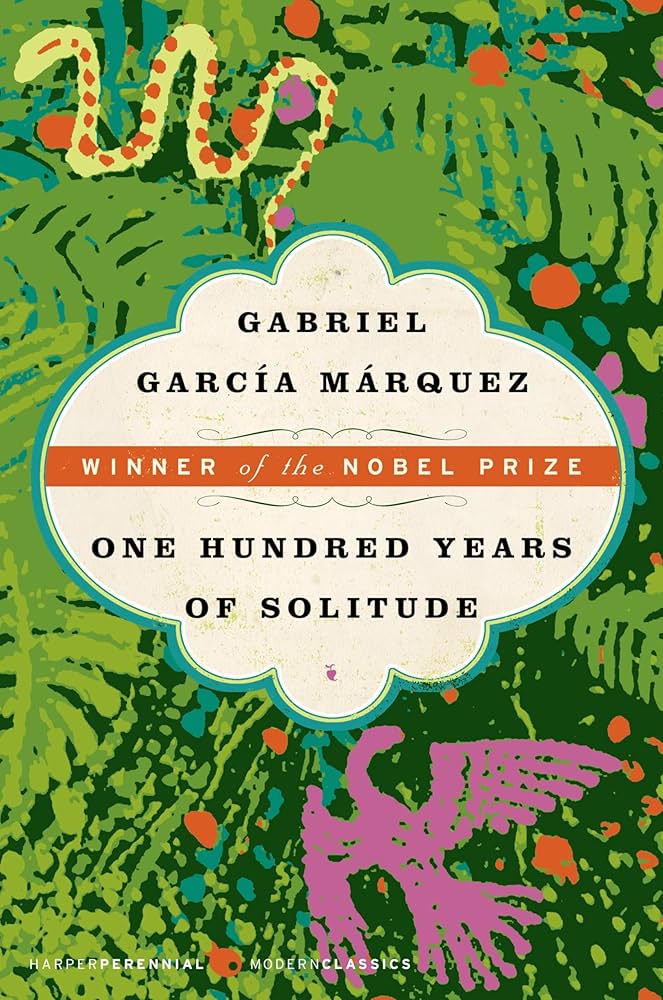
For those of us who grew up on the Caribbean coast of Colombia, there’s a certain inherent magic in the air, the way that stories are told, and realities are perceived in a way that often blurs the lines between the everyday and the extraordinary. Maybe it’s the heat that shimmers the air into mirages, or perhaps it’s the mix of cultures and stories that imbues our folklore with a unique sense of wonders. Whatever the reason, the fantastical often feels like a natural extension of the real in places like my hometown, Sincelejo, Sucre. It’s this very sensibility that makes reading Gabriel García Márquez’s One Hundred Years of Solitude feel like coming home. Márquez, a literary titan whose name resonates across the globe, gifted the world this masterpiece, a novel that stands as a cornerstone of Latin American literature and a testament to the power of storytelling. This isn’t just a book; it’s a reading experience, a journey through a century of captivating tales woven into the fabric of a single, unforgettable family. And today, we’ll explore the magic of Macondo through a familiar lens, from the heart of the Colombian Caribbean to the very soil that nurtured García Márquez’s extraordinary vision.
At its core, One Hundred Years of Solitude chronicles the epic saga of the Buendía family across seven generations and the rise and fall of their mythical town, Macondo. The narrative unfolds in a way that mirrors the cyclical nature of life itself, with patterns of love, war, solitude, and tragedy repeating across the generations. We are introduced to the impulsive patriarch, José Arcadio Buendía, whose relentless curiosity leads him to groundbreaking discoveries and, eventually, to madness. Then there’s the lovely Úrsula Iguarán, the indomitable matriarch who anchors the family through decades of turmoil and change. Their lineage branches into memorable figures like Colonel Aureliano Buendía, a revolutionary who fights in countless civil wars only to retreat into crafting tiny gold fishes. A succession of other Buendías, often repeat the mistakes of their namesakes; the repetition of names with several Aurelianos and José Arcadios appearing throughout the century underscores a central theme of the novel, the cyclical nature of history and the way familial traits and destinies seem to echo through time.
Macondo itself evolves from an isolated, almost Edenic village, untouched by the outside world, to a bustling town transformed by the arrival of gypsies bearing wondrous inventions like magnets and ice. The town’s fate takes a dramatic turn with the intrusion of civil wars that bring violence and death to its once-peaceful existence. The arrival of modernity, symbolized by the American Banana Company, brings a period of fleeting prosperity followed by exploitation and a devastating massacre of striking workers. This event (based on real historical occurrences in Colombia) marks a turning point, leading to years of relentless rain and the eventual decline and apocalyptic destruction of Macondo. The journey of Macondo, from its utopian beginnings to its ultimate demise, can be seen as a reflection of the historical trajectory of many Latin American societies that have experienced periods of growth and prosperity often disrupted by conflict and the impact of external forces.
One of the most pervasive themes in One Hundred Years of Solitude is solitude which manifests in various forms throughout the Buendía family. Characters often find themselves trapped in emotional detachment or physical isolation, unable to truly connect with others or break free from their own internal worlds. This theme of solitude resonates deeply, perhaps especially in cultures that highly value community and family ties, prompting us to consider the different ways isolation can manifest and its profound impact on individuals and families.
Love and relationships are also central to the narrative, explored through passionate affairs, enduring familial bonds, and the recurring and unsettling motif of incest. The novel delves into the complexities of human connection, often showing how love can be both a source of joy and a catalyst for tragedy. The repeated warnings against incest and its eventual occurrence, resulting in the birth of a child with a pig’s tail, can be interpreted as a powerful metaphor for the dangers of isolation and the potential for self-destruction when communities or families become too insular and disconnected from the outside world.
The shadow of war and political conflict looms large over Macondo, mirroring the turbulent history of Colombia marked by numerous civil wars between the Liberal and Conservative parties. For those of us who have grown up in Colombia, even in relatively peaceful areas, an awareness of this history of conflict is often ingrained. This awareness can create a deeper resonance with the struggles and ultimate disillusionment of characters like Colonel Aureliano Buendía, who becomes weary of the endless cycles of violence.
Perhaps the most striking theme is the cyclical nature of history, where the Buendía family and Macondo seem destined to repeat the same patterns of behavior and misfortune across generations. Despite their efforts to find happiness and progress, the characters often find themselves repeating the mistakes of their ancestors, trapped by their family history. This cyclical view of history can be seen as a reflection of a broader Latin American experience, where societal progress has often been marked by recurring political and economic cycles, creating a sense that history sometimes moves in circles rather than in a linear path.
Finally, the novel explores the impact of progress and modernity on the traditional way of life in Macondo, particularly through the arrival of the American banana company. While the company initially brings economic growth, it also introduces exploitation, social upheaval, and ultimately leads to a tragic massacre, shattering the idyllic nature of Macondo. This narrative serves as a powerful commentary on the often-unforeseen and detrimental consequences of rapid modernization and the imposition of foreign economic models on local communities, a theme that resonates with the historical experiences of many post-colonial nations.
One Hundred Years of Solitude is celebrated for its distinctive literary style known as magical realism, a technique that seamlessly blends fantastical and surreal elements with realistic depictions of everyday life. Within the narrative, the extraordinary is presented as ordinary, and the mundane often takes on a mystical quality. We encounter a priest who levitates after drinking chocolate, a rain of yellow flowers, a woman who ascends to heaven while folding laundry, a trail of blood that meanders through the town to announce a death, and ghosts who interact with the living as if it were the most natural thing in the world.
This style isn’t merely about adding fantastical elements for their own sake; it reflects a unique Latin American worldview where the boundaries between the natural and the supernatural are often fluid. Growing up in Sincelejo, I’ve witnessed this firsthand – a cultural acceptance of the extraordinary as an integral part of reality, influenced by indigenous beliefs, rich folklore, and a history marked by events that sometimes defy conventional explanation. This cultural context makes García Márquez’s use of magical realism feel not just believable but deeply resonant. He masterfully employs this style as a powerful tool to explore profound social, political, and historical realities in a way that conventional realism might not capture. The magical elements often serve as potent metaphors, allowing him to comment on the absurdity of war, the weight of history, or the intricate complexities of human emotions with a depth and nuance that transcends literal representation.
Throughout One Hundred Years of Solitude, García Márquez weaves a rich tapestry of symbols and motifs that deepen the novel’s meaning and reinforce its key themes. The Buendía house itself stands as a central symbol, representing the family’s lineage, their internal world, and their eventual decline and isolation. Initially a place of vibrant life and connection, it gradually falls into disrepair, mirroring the disintegration of the family.
To fully appreciate One Hundred Years of Solitude, it’s essential to understand its historical and political backdrop. The novel is deeply rooted in the history of Colombia during the 9th and 10th centuries, a period marked by prolonged and often violent conflicts between the Liberal and Conservative parties. The numerous civil wars depicted in the novel directly reflect this turbulent period in Colombian history. Additionally, the novel addresses the significant influence of foreign economic powers, most notably through the fictionalized account of the American banana company, which mirrors the real-life impact of companies like the United Fruit Company. We don’t like United Fruit Company, we just don’t – they killed thousands of people and the bodies haven’t been found..
García Márquez himself drew heavily from his personal experiences growing up in Aracataca, a town in the Magdalena Department of Colombia, which served as the inspiration for Macondo. The region’s rich folklore, the stories told by his grandparents, and the atmosphere of his childhood all contributed to the unique blend of reality and fantasy found in the novel. One Hundred Years of Solitude can also be interpreted as a powerful allegory for the history of Colombia and, more broadly, for the post-colonial experience of Latin America. It grapples with issues of national identity, the challenges of modernization, and the enduring legacy of colonialism, themes that continue to resonate across the continent. From a Sincelejo perspective, having witnessed some of these historical echoes in our own region, the novel’s portrayal of these struggles feels particularly poignant and relevant, offering a fictionalized yet deeply truthful reflection of our shared past.
One Hundred Years of Solitude has achieved immense international acclaim since its publication, becoming a cornerstone of world literature. Translated into numerous languages, it stands as one of the most widely read Spanish-language works after Don Quixote. The novel played a pivotal role in the Latin American Boom, bringing international attention to the richness and diversity of Latin American literature. It has garnered critical acclaim from literary figures and scholars worldwide, recognized for its innovative narrative techniques, its profound exploration of universal human themes, and its unique blend of history and myth.
Despite being rooted in a specific time and place, the themes explored in One Hundred Years of Solitude – solitude, love, the cyclical nature of history, and the impact of modernity – continue to resonate deeply with contemporary readers across cultures and generations. One Hundred Years of Solitude blends the personal with the historical, and the magical with the real, creating a rich and immersive reading experience that transcends geographical boundaries and cultural differences, making it a truly global classic that speaks to the shared human condition. This is why, even in Sincelejo, we feel a sense of pride and connection to this monumental work. The recent Netflix adaptation has also introduced the magic of Macondo to a new generation, ensuring that the legacy of One Hundred Years of Solitude will continue to captivate audiences for years to come.



 International angles
Leave a comment