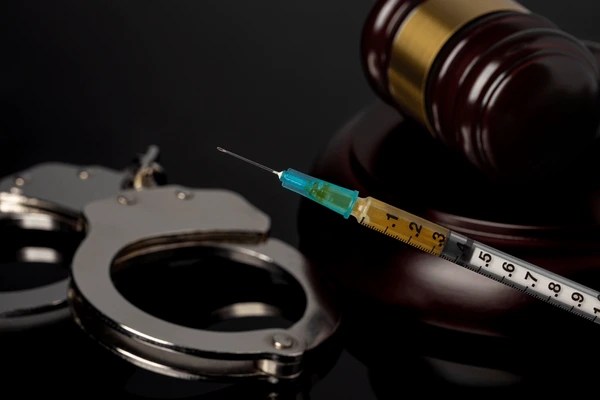
Even in global politics, the societal aspect of a definition can carry a heavy burden of boundless estimations, ranging from humanitarian to political, geopolitical, and even economic. It’s a complex battle between doing the right thing and feeling remorse, an open-ended question and dilemma that unlocks the door of probabilities to redefine the meaning of the word justice and align it with a possibility of humanity.
Death penalties have always been the norm for Justice, an act that, regardless of its brutality, continues to hold a strong degree of power. But with the political changes and the introduction of human rights and international humanitarian law, the tables have turned, and theoretical differences over the ownership of human dignity and mortality have begun to emerge.
From a political perspective, death penalties are considered the ultimate punishment to bring justice; it’s an illustration of what could have been and what will be, all to conceal the act with the punishment.
Although Death as a penalty has been legalized and widely used since ancient times, it has been implemented through different methods and systems depending on a state’s interpretation of reality and principles. This penalty was internationally seen as a global day of joy. People considered execution days not as a remorseful day filled with emotions for both victims and the family of the detainee, but it was a carnival day filled with activities and joyous dances that would blur the line of human dignity and impartiality. That has led to multiple questions about what is right and what is not, and whether such an act truly brings justice to both families, or is merely a form of justice.
Some have called it a dignified, painless death that facilitates justice in all its forms. But if we go back in time and look into the methods used for such a penalty, one would definitely question what is considered human within the scale of humanitarian human dignity and what blurs the lines between entertainment. Death penalty methods differ from one era to another, and with modernization, the aspect of painless death has been strongly recommended and put into use when such a technology was available.
From painful beheading through a sword and an axe, to the guillotines, electric chairs, nooses, and the modern technology of lethal injection. The aforesaid have all been used as a way to end one’s life painlessly, as it has been regarded. However, dissecting each method allowed human rights advocates to fight against such brutality, even if it brings a sense of joy that can’t be understood through someone’s death.
Human dignity has to be protected at all times, especially at times of death and the departure of a soul. No matter how brutal a human being they were, dignity shall always be served, regardless of the belief that death penalties are the strongest deterrence for reducing crime rates in the world.
Botched Executions
From mercy killings to painless death, phrases varied, but the obsidian and mental pain remained constant throughout the years. As rational human beings, we have the ability to decide what is considered justice and what is considered human humiliation in the form of the former. But over time, the significance of human dignity has diminished. The whole idea of painless death was a decoy used to justify the action, when behind bars, mental and physical pain were the pinpoint of the action. Botched executions are not a new phenomenon; from historical times until now, records concerning such a procedure continue to escalate, even though it has been proven and confirmed by medical experts that they are indeed painless and end in success.
Depending on the method, the procedure of an execution has different steps and stages. But one of the advanced technologies used for such an action is the lethal injection, where three drugs are injected into the detainee’s body through the IV, placed into the detainee’s bloodstream.
The first drug known as Sodium Thiopental, that according to experts is based on making the person lose consciousness, the second drug is the start of the painful end known as Pancuronium Bromide that is responsible for paralyzing the body. And the final drug is Potassium Chloride, which is the main drug that causes death through suffocation. However, although the first two drugs are meant to make the inmates lose consciousness and feel no pain once the third drug is induced, there is little to no evidence of it being successful. Many executions have ended in failure and severe pain, where hours were spent trying to put an end to a life that has the potential of being punished while still breathing and placed behind bars. As Austin Sarat stated ‘With each development in the technology of execution, the same promises have been made, that each new technology was safe, reliable, effective, humane. Those claims have not generally been fulfilled.’
Maintaining human dignity is far gone and lost its aspect in the humanitarian scale, as botched executions, along with the mental and physical pain that are linked with the waiting period, cause one to lose every aspect and faith in humanity. And examples of such are as follows
- May 4, 1990. Florida. Jesse Joseph Tafero. Tafero was sentenced to be executed through the electrical chair, but on the day of, his head was set on flames that he started to cry out of pain of burning and the electrical shocks that were vibrating into his body. Not only that, but the electrical shocks were tripled to more than the normal volts just so he can be put to death. His death was slow and painful, which was based on being set on fire, electrocution, and severe burns from the former. The aforesaid are all forms of torture and not an easy painless death. Marking his death as a result of torture.
- May 3, 2000. Arkansas. Christina Marie Riggs. Riggs was sentenced to die by lethal injection, but her execution was delayed for 18 minutes due to the fact that the medical team could not find a vein, which led to the injections being placed on her wrist. When it comes to death and departure, every minute counts on earth, and having 18 final minutes of delay and the painful act of being poked throughout the body to find a vein that will end one’s life, seals the deal for human dignity and the lost cause that comes with it.
- February 28, 2024. Thomas Creech. Idaho. Creech’s case did bring some attention into the scene as his executions failed completely, and in essence, that led the guards to take him back to his cell and reschedule the execution for another day, with another team. For 58 minutes, Thomas Creech suffered mental and physical pain of being poked all over his legs, arms, and body just to try and find a vein for an IV. The trial took 58 whole minutes of pain and being poked which in the end was set to take the inmate back to his cell and revive the mental pain for another scheduled execution as he recovers from the recent one.
Psychological torture
As human dignity and rationality started to lose its weight on the humanitarian scale, botched executions that are also followed by rescheduled executions have been taking a new shape and form in this context as both started to have a solid stand for the cause that led to what is known as Death Row Syndrome, which is widely spread among inmates who have survived a first execution and are scheduled for a second one. As well as death row inmates who have spent a very long time on death row. This syndrome is known to cause severe depression, suicidal thoughts, and much more. All are a result of a stressful period of waiting for death, not to forget the pain that would be associated with the procedure. That is a full sense of losing one’s dignity as humans who are supposed to be protected by humanitarian law, regardless of the outcome of their actions. No one is immune to wrongdoing, and no one is immune to punishment. But punishment through and by death erased all aspects of human dignity, as it’s a method of torture that awaits the mind before the body.
Juridical Responses
According to UN Human Rights Chief, Volker Turk, while addressing the human rights council, he emphasized the importance of protecting human dignity even if one has been seen to be guilty of fault by specifically mentioning death as a penalty used and dependent on to reduce crimes. As he said “The use of the death penalty is egregious against any human being,”. He continued his statements by highlighting the statistical evidence of crime rates, before and after abolishing death penalties, where such an act had and continues to have minimal to zero effects on crime, where he said “Evidence strongly suggests that the death penalty has little or no effect on deterring or reducing crime.”.
As part of the death penalty abolition act and reaction, the United Nations OCHR along with Death Penalty Research Unit at Oxford and Death Penalty Project, organized a side event in Geneva on the 26th of September to discuss the probabilities of abolishing death penalties over all. This discussion and related meeting have been going on for many years, and, as far as progress goes, some countries have been opposed to abolishing the act for traditional and religious reasons. The meeting ended with a report that analyzed the importance of abolishing death penalties, where alternatives can be used instead of death. Not only that, but a follow-up meeting has been scheduled for 2026 in Paris. The aforesaid is an active way to keep track of progress, as abolishing the death penalty and advancing a sustainable, cruelty-free environment are part of the 2030 agenda and plan.
What the future holds for us and for the next generation is not predictable through political and humanitarian calculations. In fact, it is based on actions and resilience in the face of such cruelty. On the lookout for human dignity, one aspires to make things better and to allow people to grow through methods that require neither violence nor pain. Death in itself is painful, both mentally and physically. So imagine the state of inmates who wait for their death on a daily basis, ticking off the days and allowing themselves to feel the days end as their ending comes closer. It’s not humane to disregard human dignity, and if the future is meant to be all about humanitarian actions, then death as a final penalty shall never be considered and taken into account.
References
- United Nations. (2024, January 31). Death penalty incompatible with right to life. OHCHR. Retrieved from https://www.ohchr.org/en/stories/2024/01/death-penalty-incompatible-right-life
- So Long as They Die: Lethal Injections in the United States: II. Lethal Injection Drugs. (n.d.). Retrieved from https://www.hrw.org/reports/2006/us0406/4.htm
- Radelet, M. (2021, October 28). Botched Executions. Death Penalty Information Center. Retrieved from https://deathpenaltyinfo.org/executions/botched-executions
- Repeated Execution Dates Called Psychological Torture | Death Penalty Information Center. (2013, August 15). Death Penalty Information Center. Retrieved from https://deathpenaltyinfo.org/repeated-execution-dates-called-psychological-torture
- Council of Europe. (2025, September 29). Side-event to the 60th session of the United Nations Human Rights Council – Launch of the report “Between retention and abolition: making sense of a death penalty without executions.” Abolition of the Death Penalty; Council of Europe. Retrieved from https://www.coe.int/en/web/abolition-death-penalty/-/side-event-at-the-united-nations-launch-of-the-report-between-retention-and-abolition-making-sense-of-a-death-penalty-without-executions-
Council of Europe. (2025, September 29). Side-event to the 60th session of the United Nations Human Rights Council – Launch of the report “Between retention and abolition: making sense of a death penalty without executions.” Abolition of the Death Penalty; Council of Europe. Retrieved from https://www.coe.int/en/web/abolition-death-penalty/-/side-event-at-the-united-nations-launch-of-the-report-between-retention-and-abolition-making-sense-of-a-death-penalty-without-executions-


 International angles
Leave a comment